The Grand Budapest Hotel divides the story chapters through color changes, allowing the audience to feel the layers of emotions in the flow of visuals. The design concept of "Hui You Ju" is similarly inspired. We use color as a time link to connect the past and present of Dongjiadu—the stone green walls evoke the old willow trees by the wharf, the autumn yellow carpets echo the sunset over the fabric market, and the cherry red furniture continues the former bustle of this place. As you wander through it, these colors will be like old friends, whispering the stories of this land.
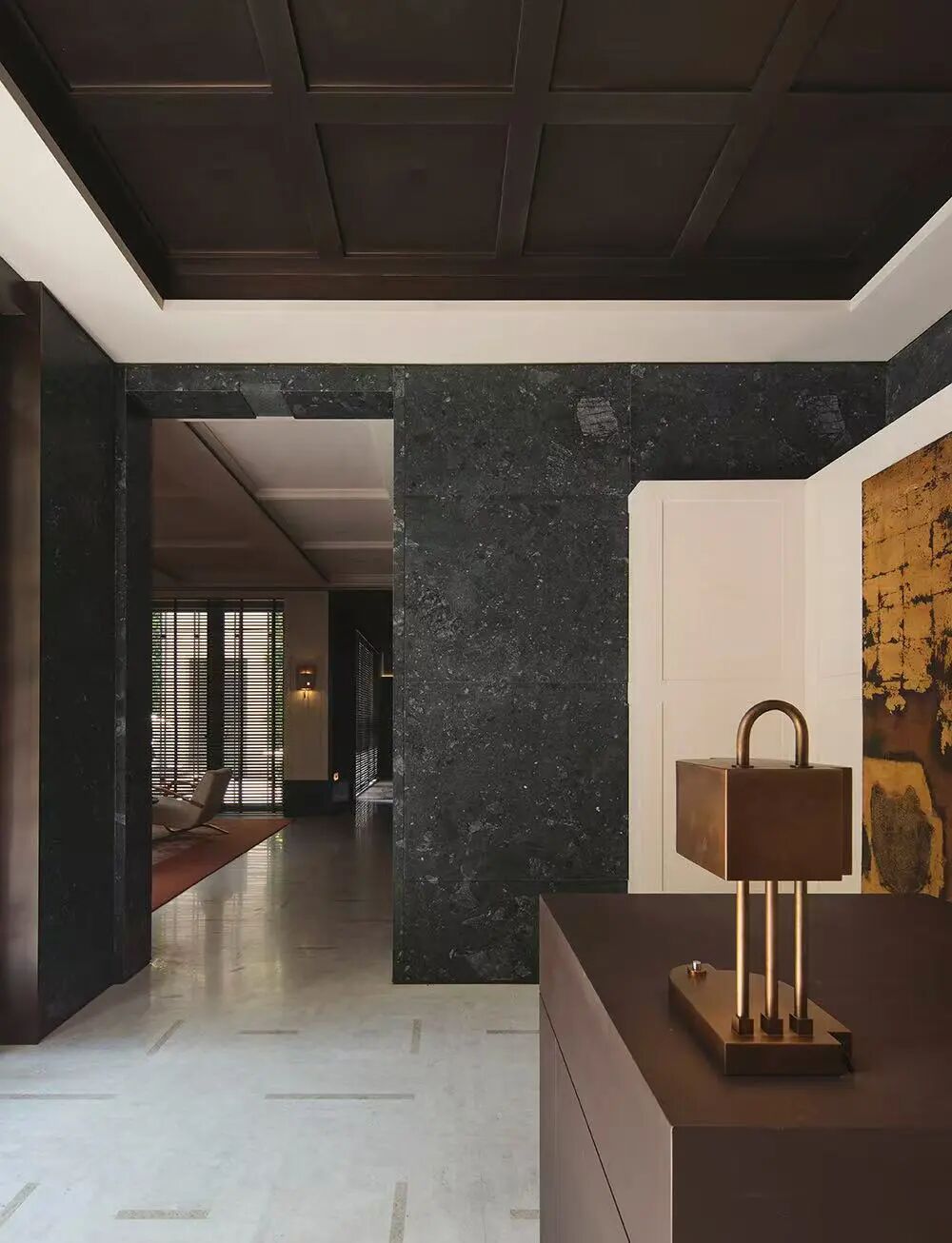
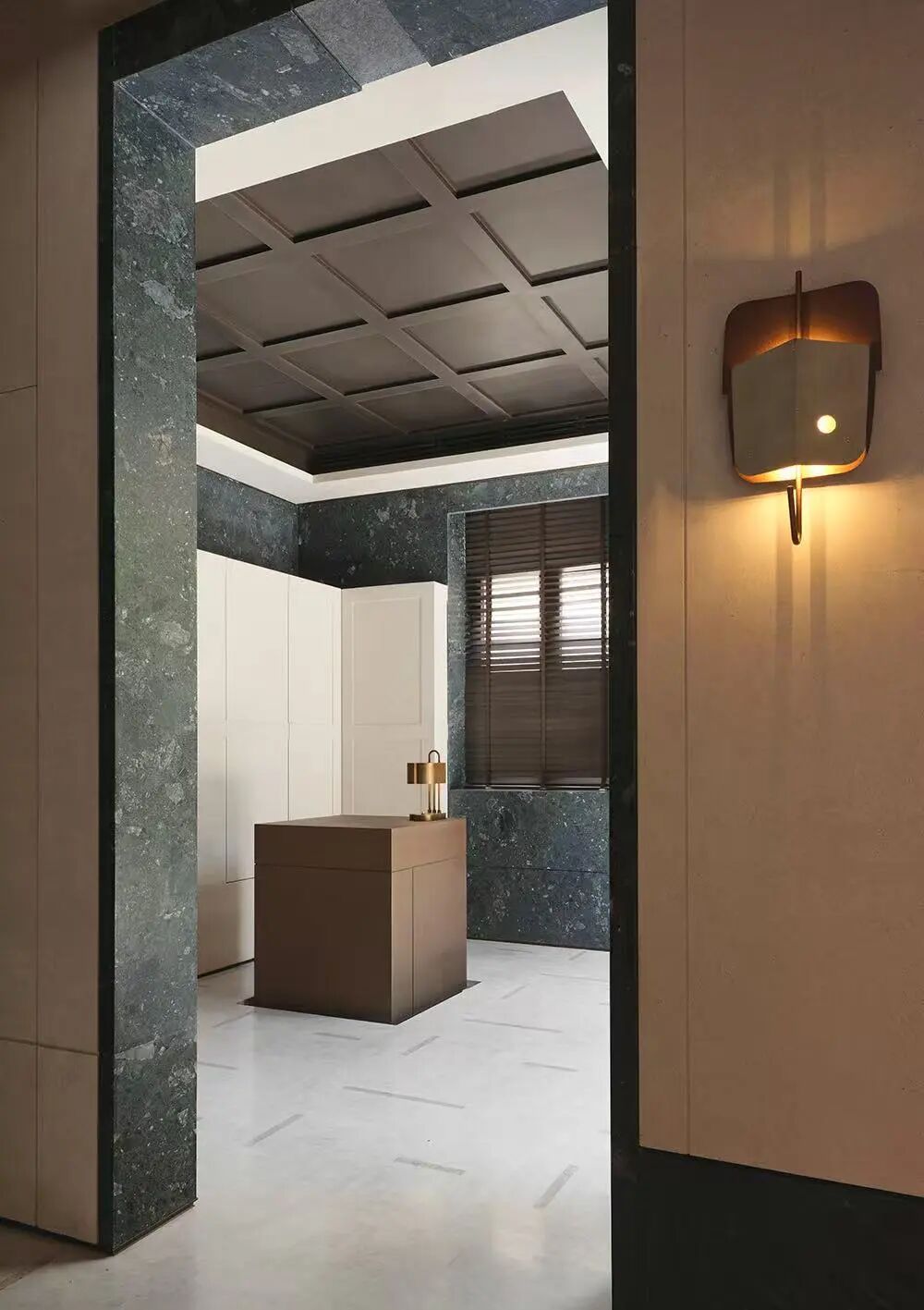
The stone green color evokes the secluded courtyards in ancient literati paintings. Push open the sliding door, and the dark green natural stone floor paired with light-colored veined marble brings the tranquility of a garden indoors. Even before stepping fully into the house, one can already feel its unique living atmosphere.
The floor pattern draws inspiration from the tile mosaic craftsmanship of old Shanghai. Marble is cut into thin strips and re-assembled, with light and dark stones arranged alternately—this creates a nostalgic old Shanghai vibe while retaining the simplicity of modern design. This texture sets the tone for the entire building and foreshadows the more wonderful use of colors ahead.
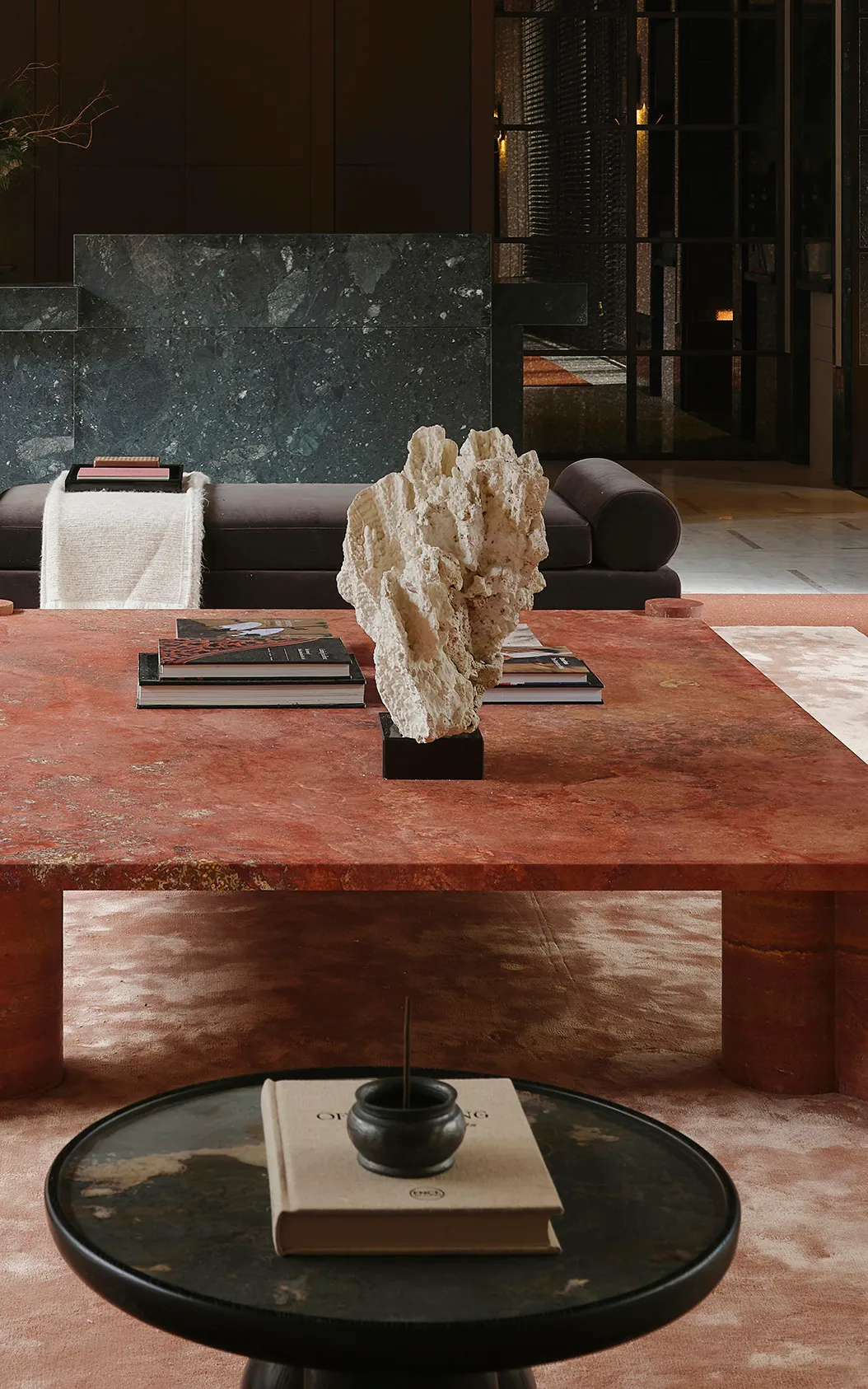
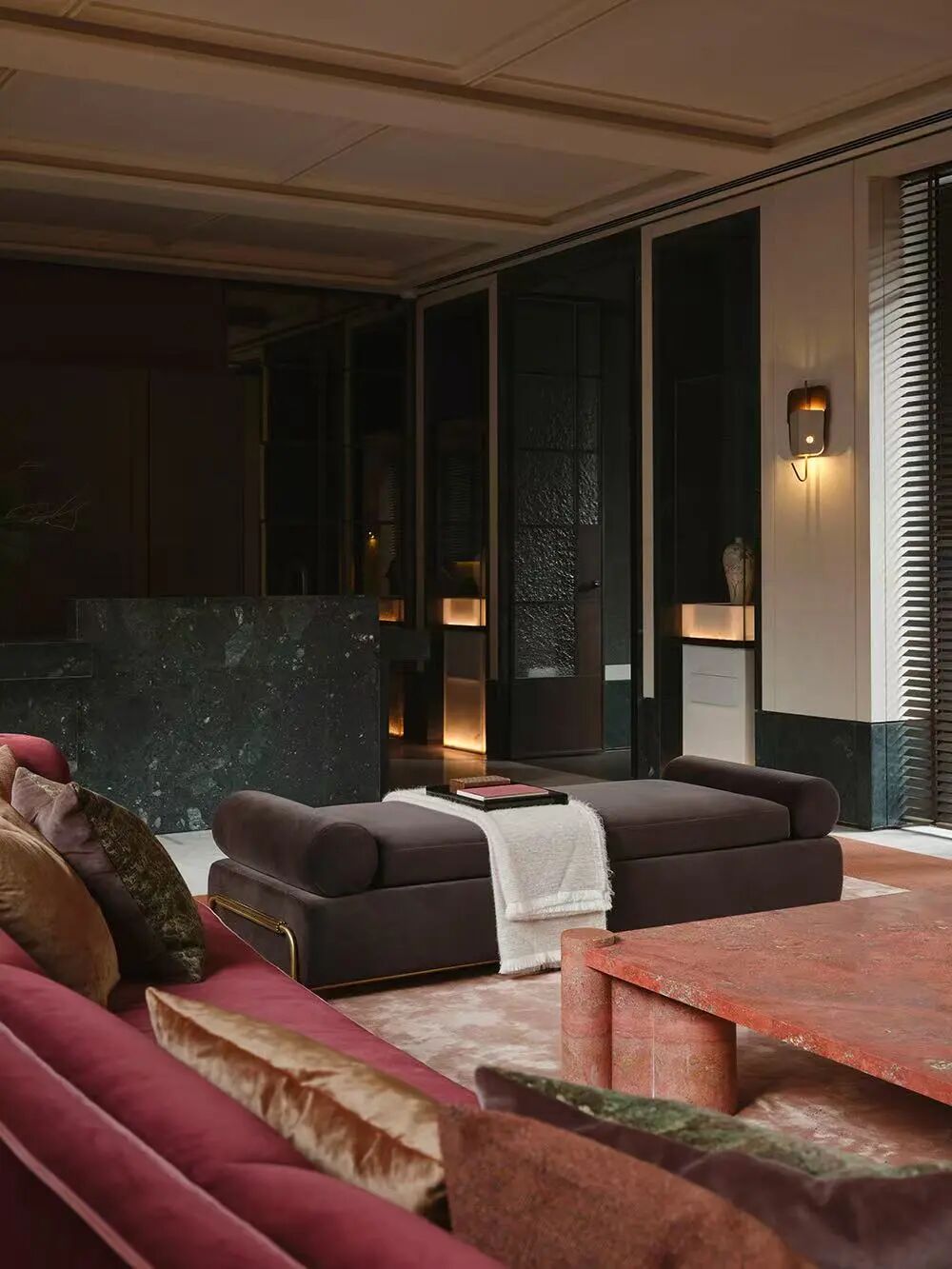
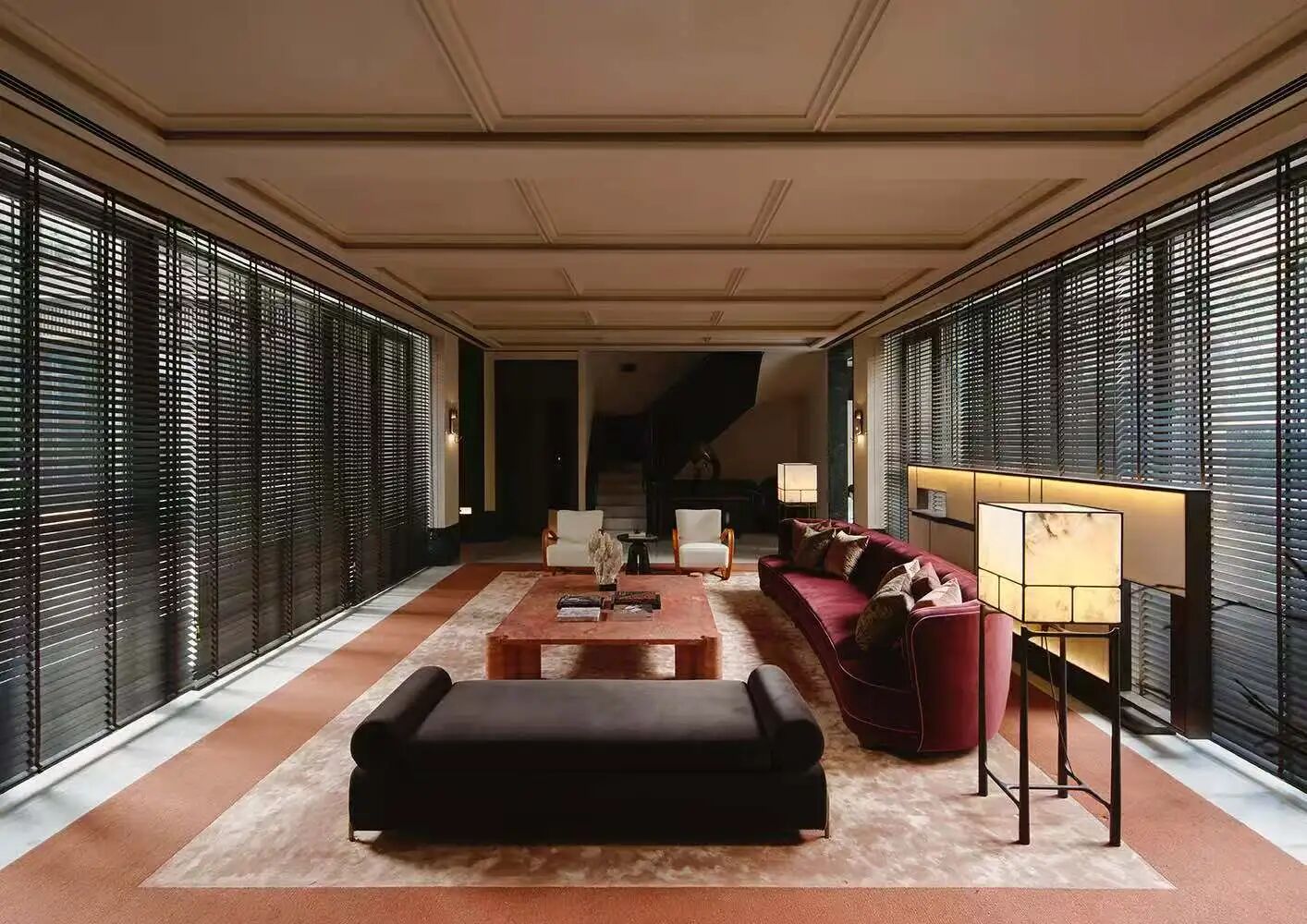
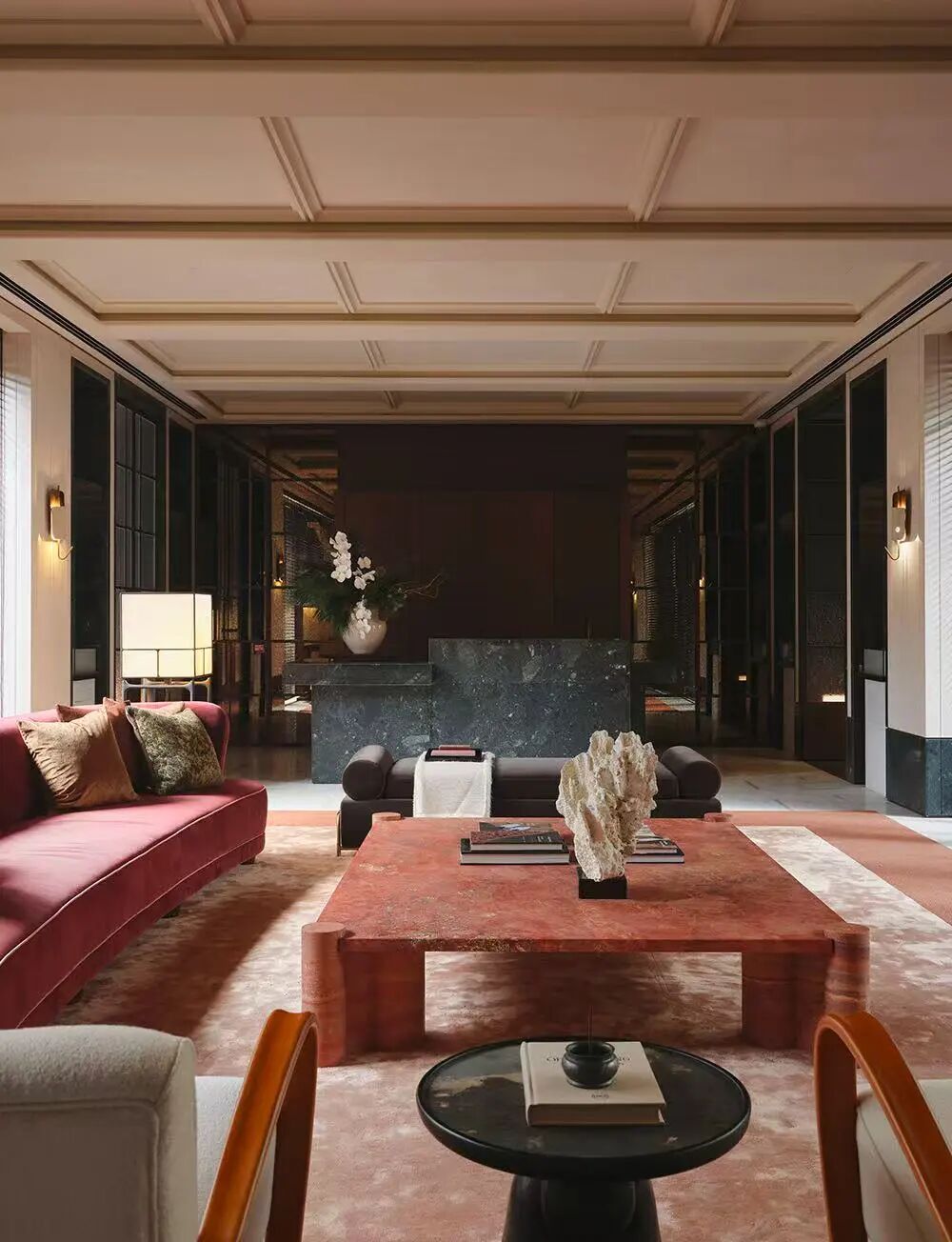
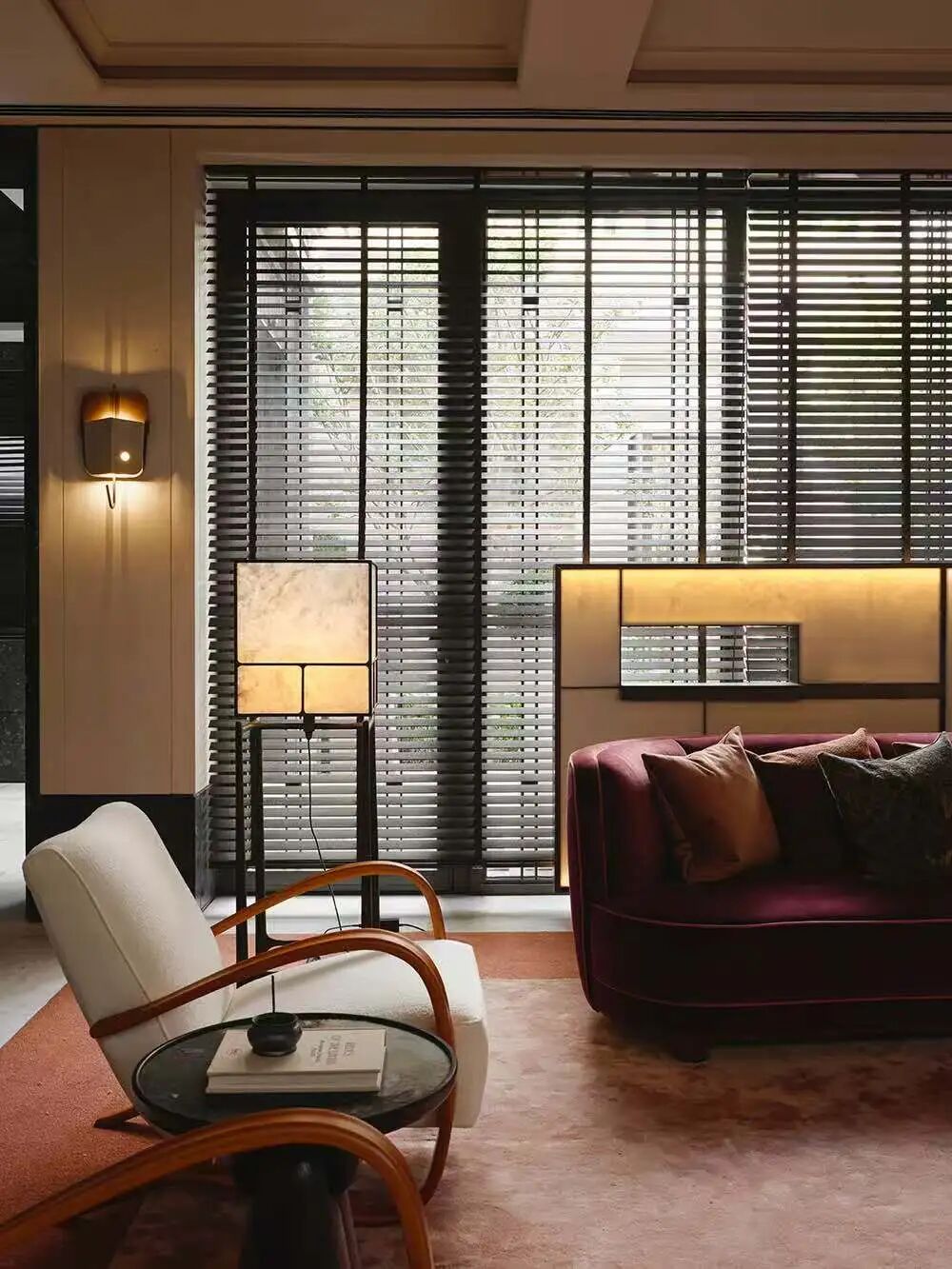
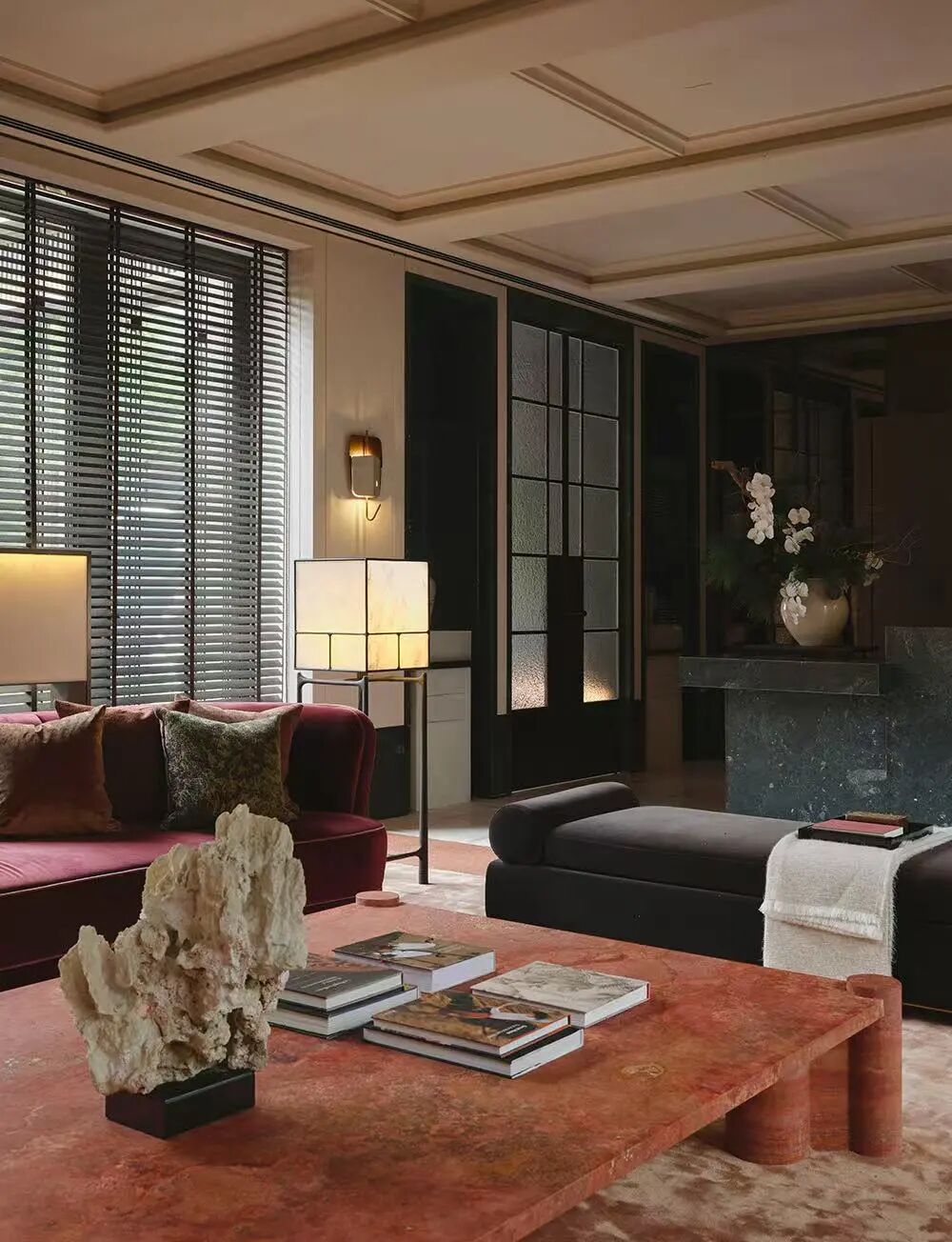
The sofa faces the garden to the south, making the entire space feel as if it is gently embraced by sunlight and greenery. Dappled light filters through the leaves and falls indoors; the orange-red travertine coffee table stands out prominently in the light and shadow, and when paired with the orange bamboo silk carpet, the entire area immediately gains a warm visual focus. This arrangement makes one imagine how many wonderful gatherings of friends will take place here, chatting freely—just like the fusion of "xūn" (a reddish-orange hue) and yellow in traditional colors, which always brings a tacit understanding of shared thoughts.
Fan-shaped metal wall lamps are embedded in the surrounding walls; their symmetrical design gives the space a neat and orderly look. The custom "Zhi Zai" floor lamps on either side of the sofa have a delicate luster at the junction of the metal stands and lamp shades, adding a modern and fashionable touch to the living room while retaining the unique understated charm of the East. The two types of lighting complement each other, making the entire reception area both modern and culturally rich.
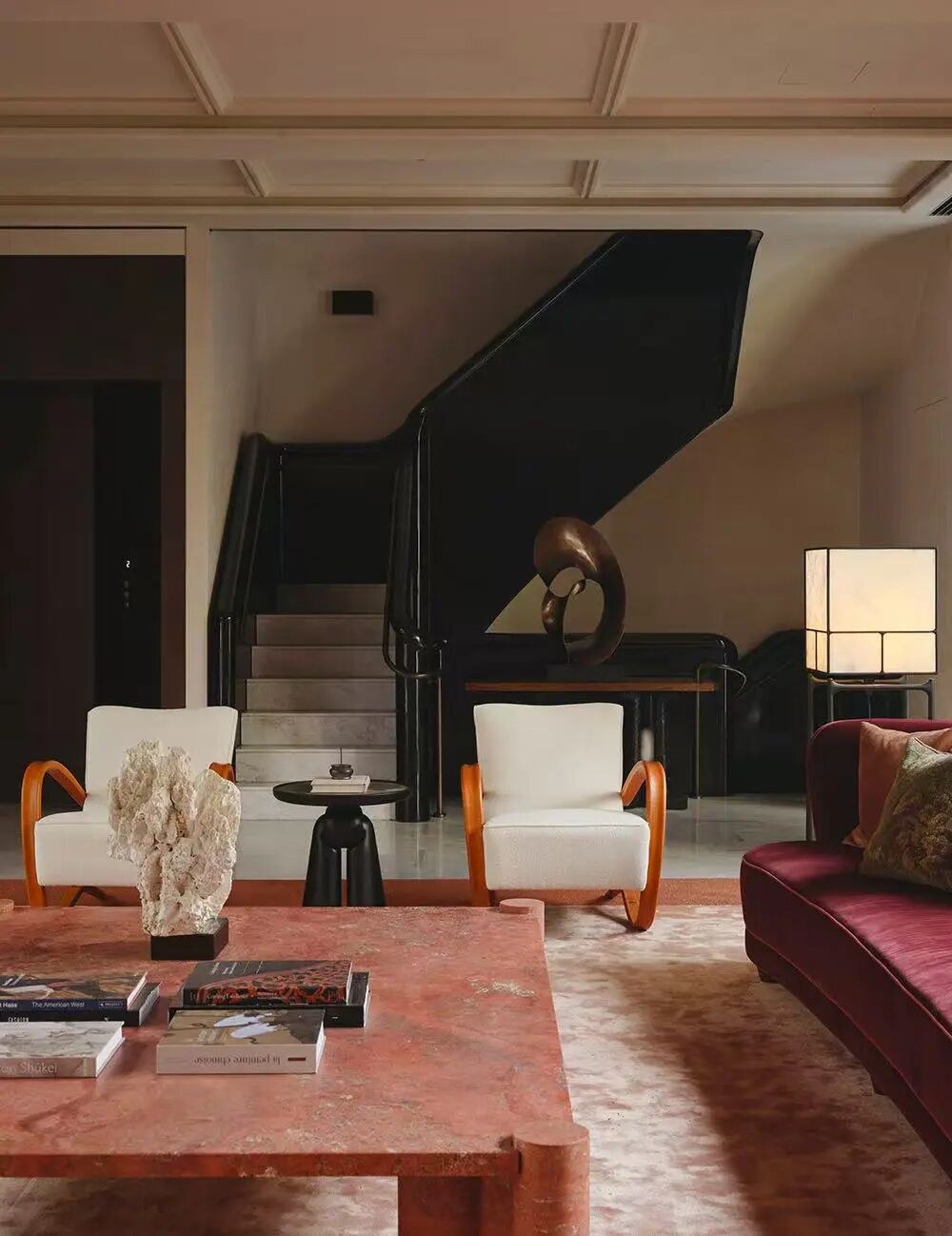
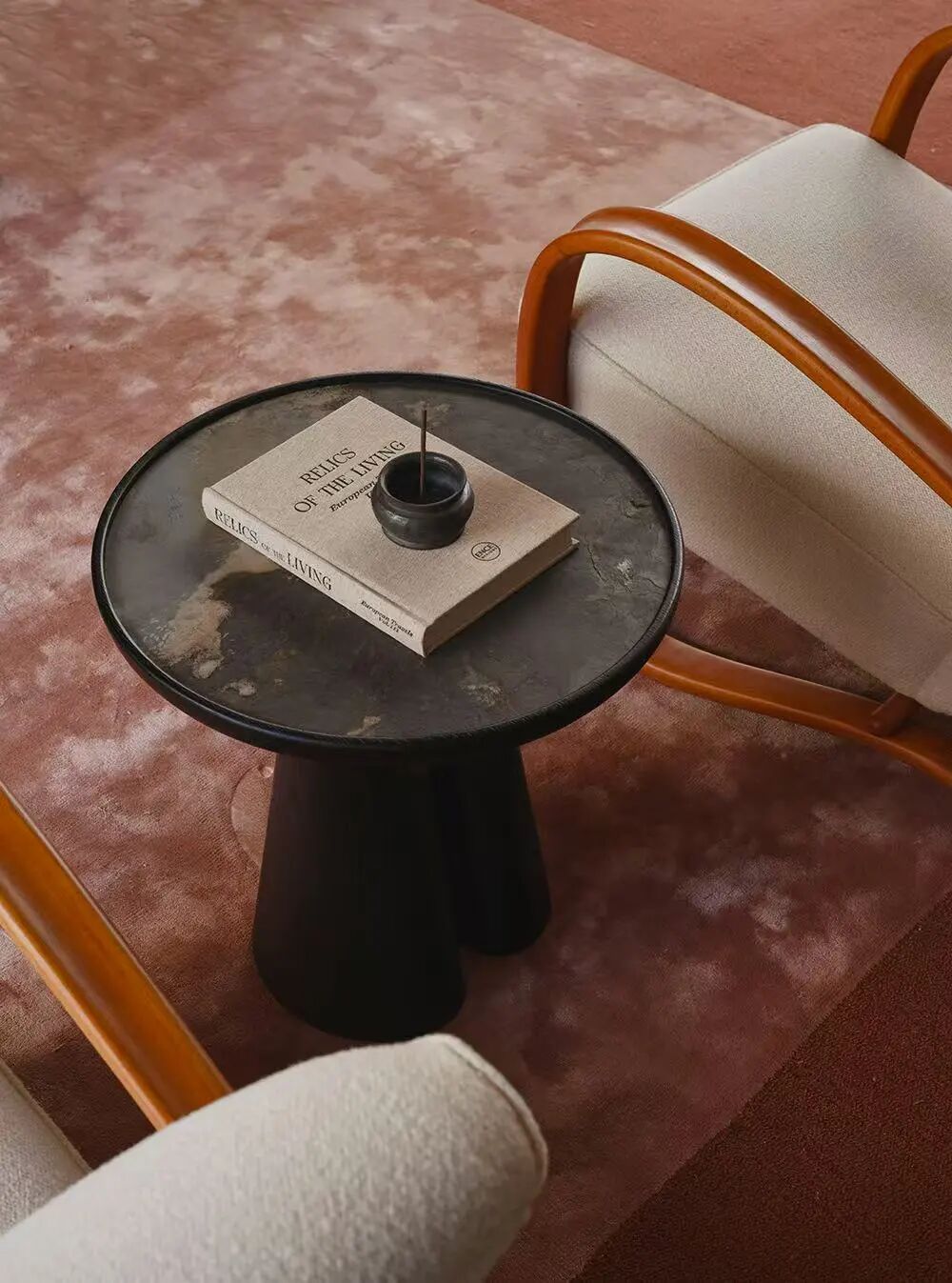
That mid-century armchair was designed by a 20th-century Czech designer. Its smooth curves and exquisite materials exude the craftsmanship warmth of the last century everywhere. On the water bar, Eastern pine branches are cleverly paired with Western orchids; the floral arrangement, balancing hardness and softness, adds a touch of tranquility to the living room. This set of decorations is both a tribute to the beauty of nature and a precious memory of that golden age of design.
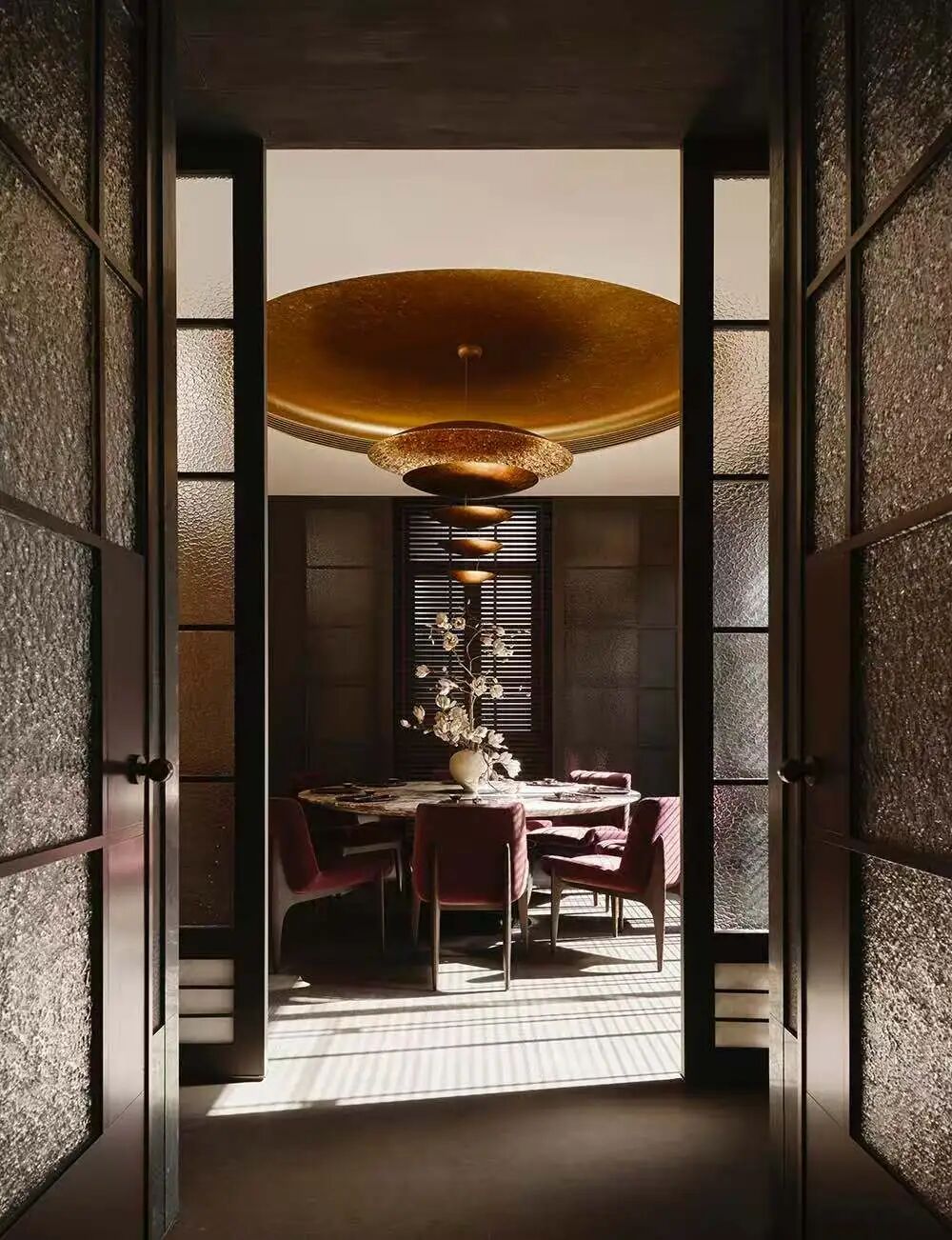
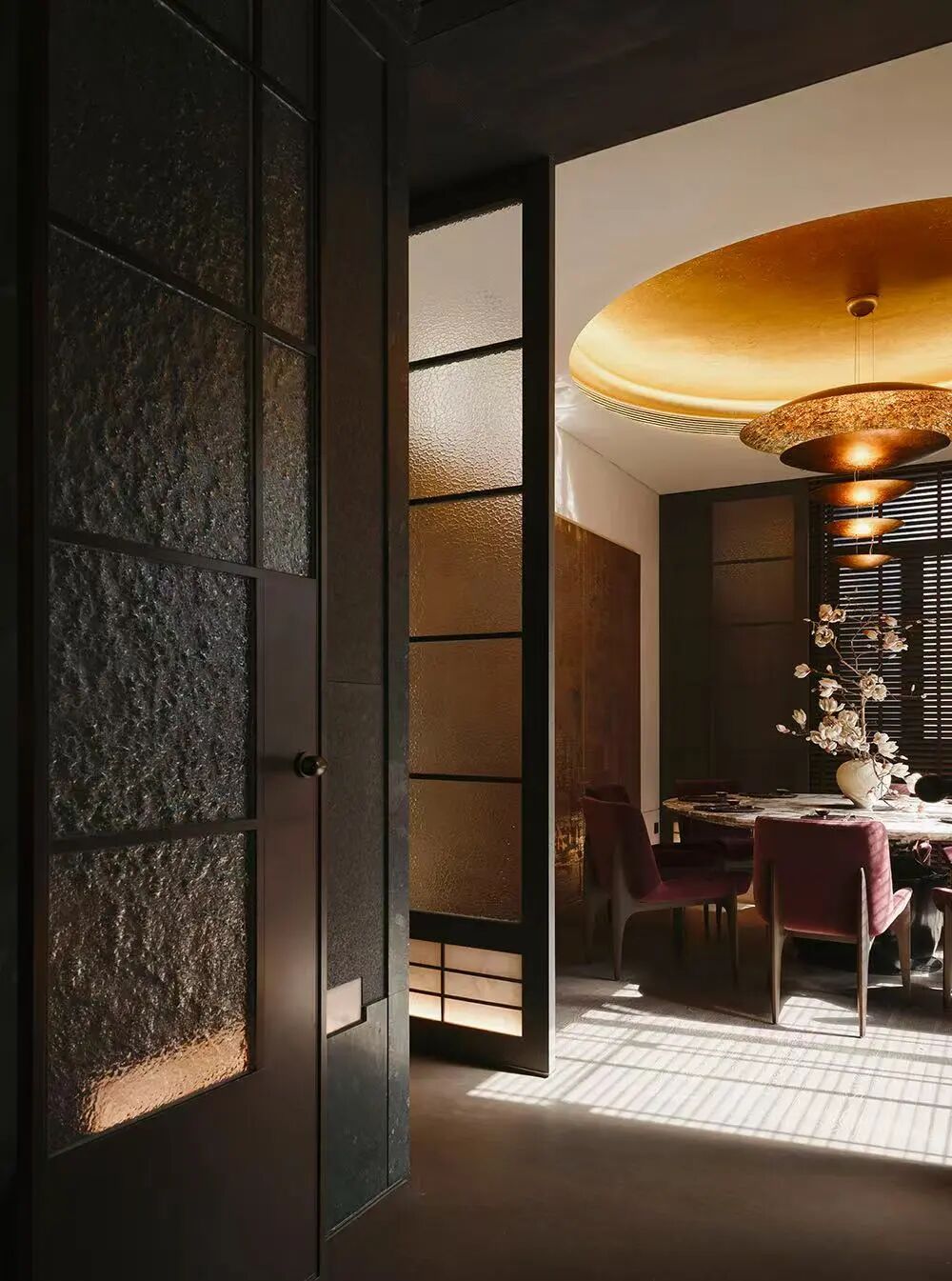
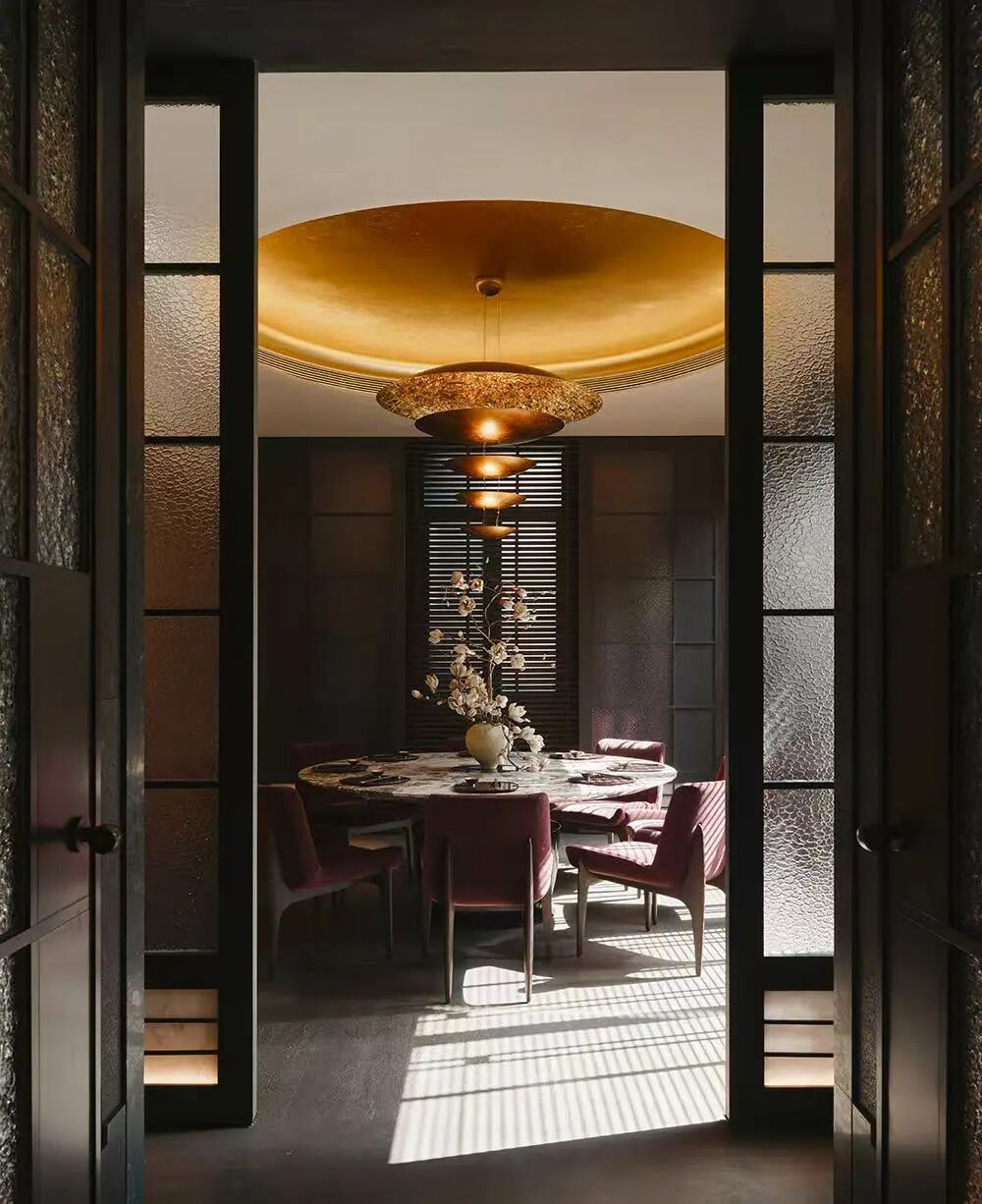
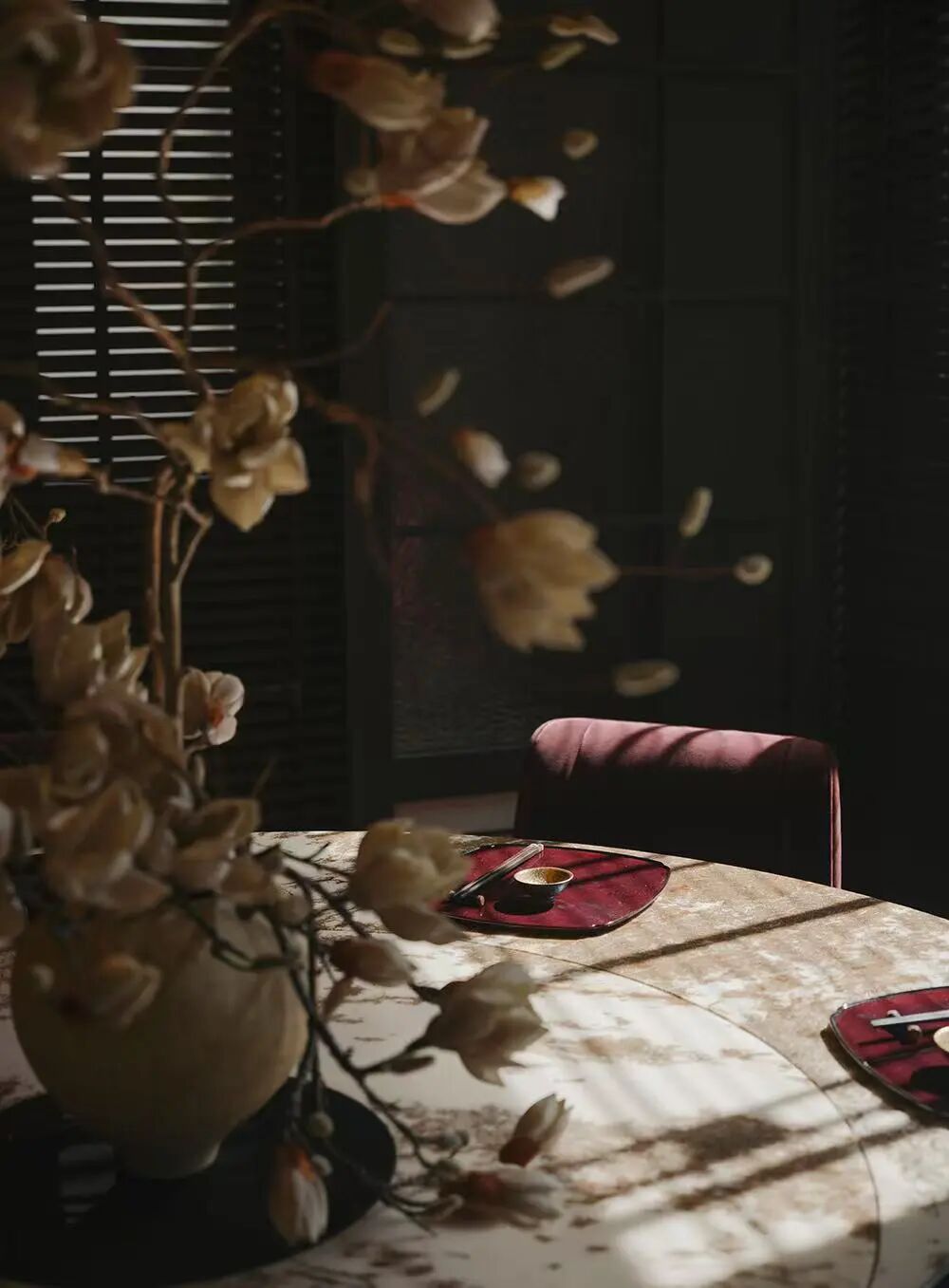
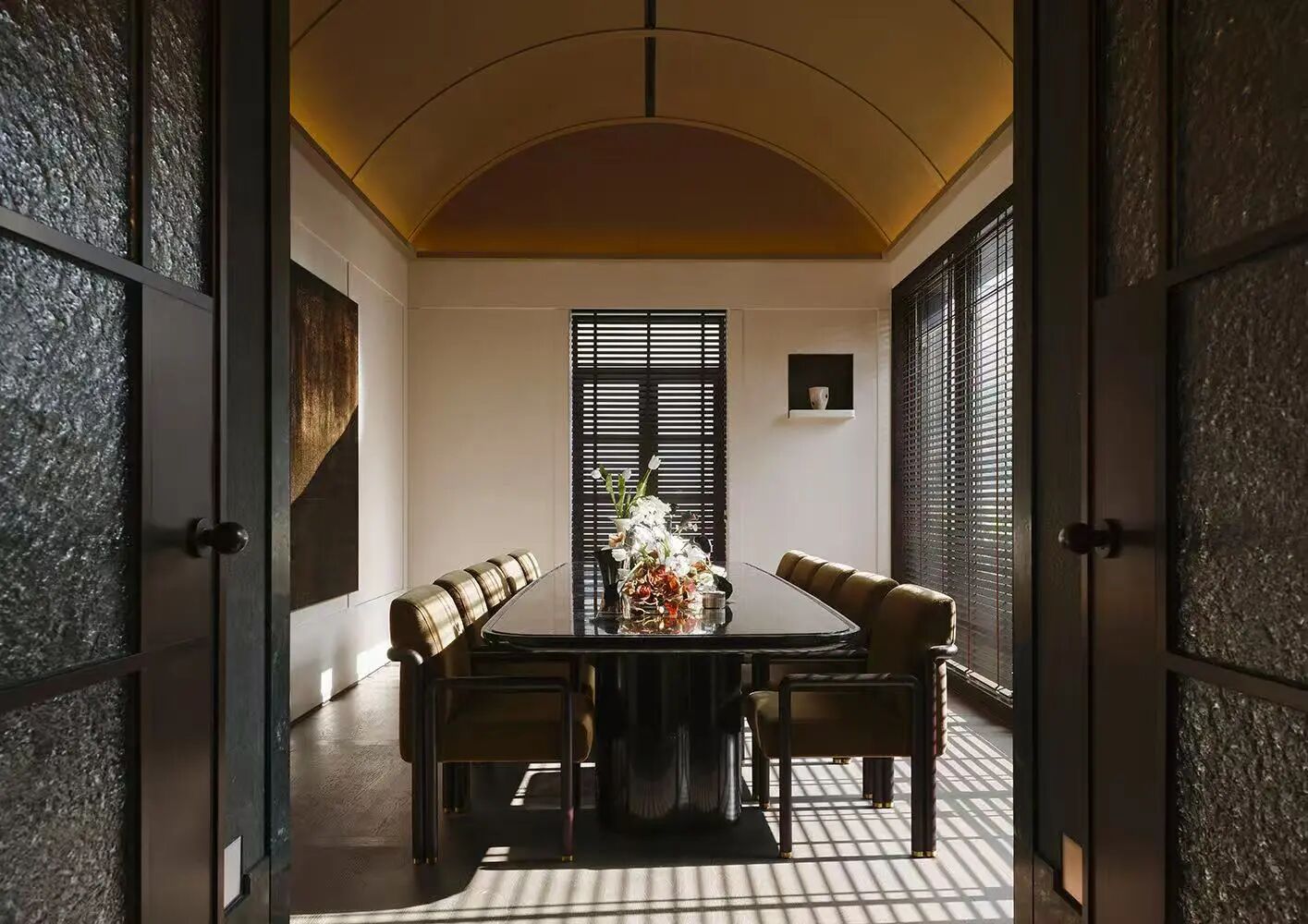
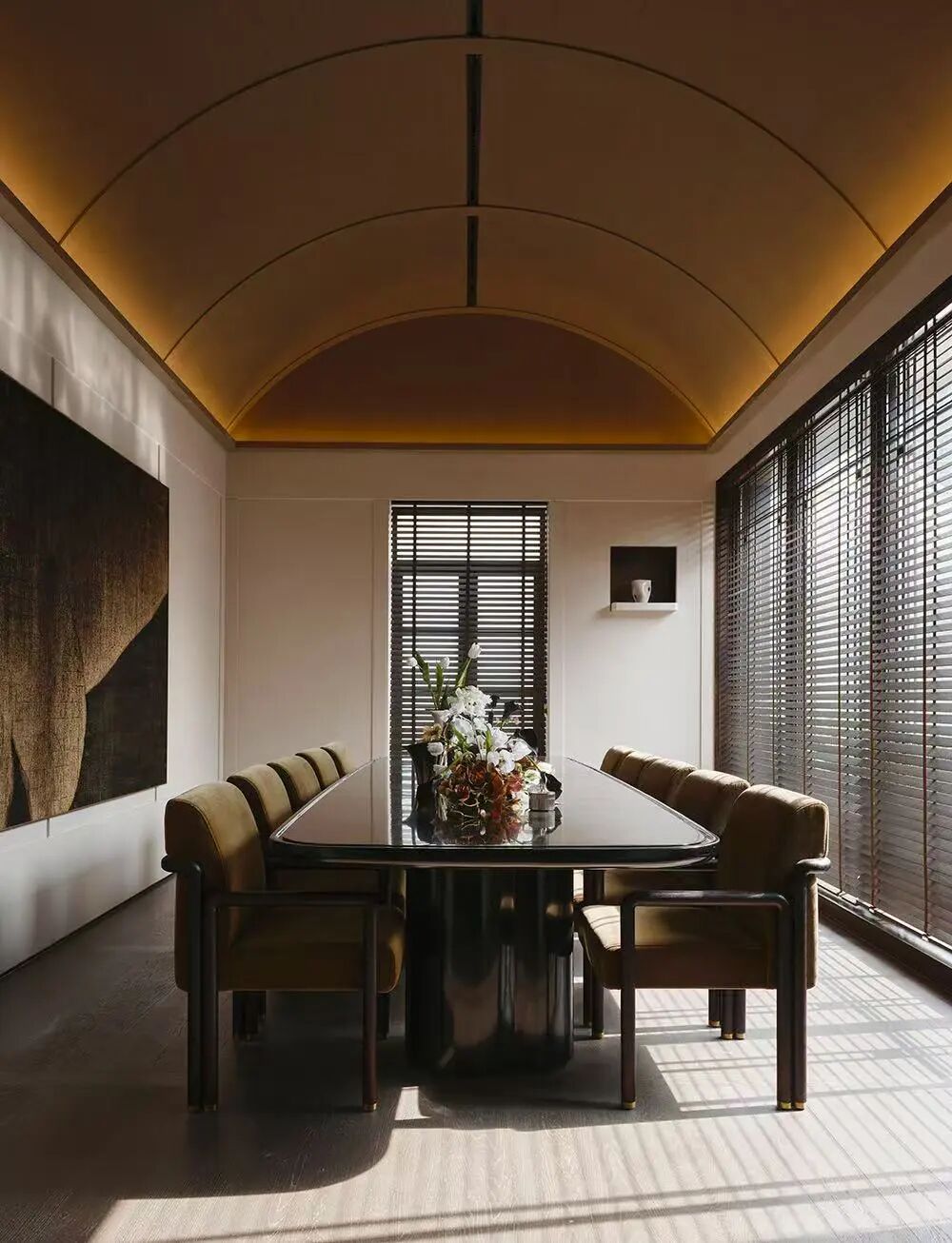
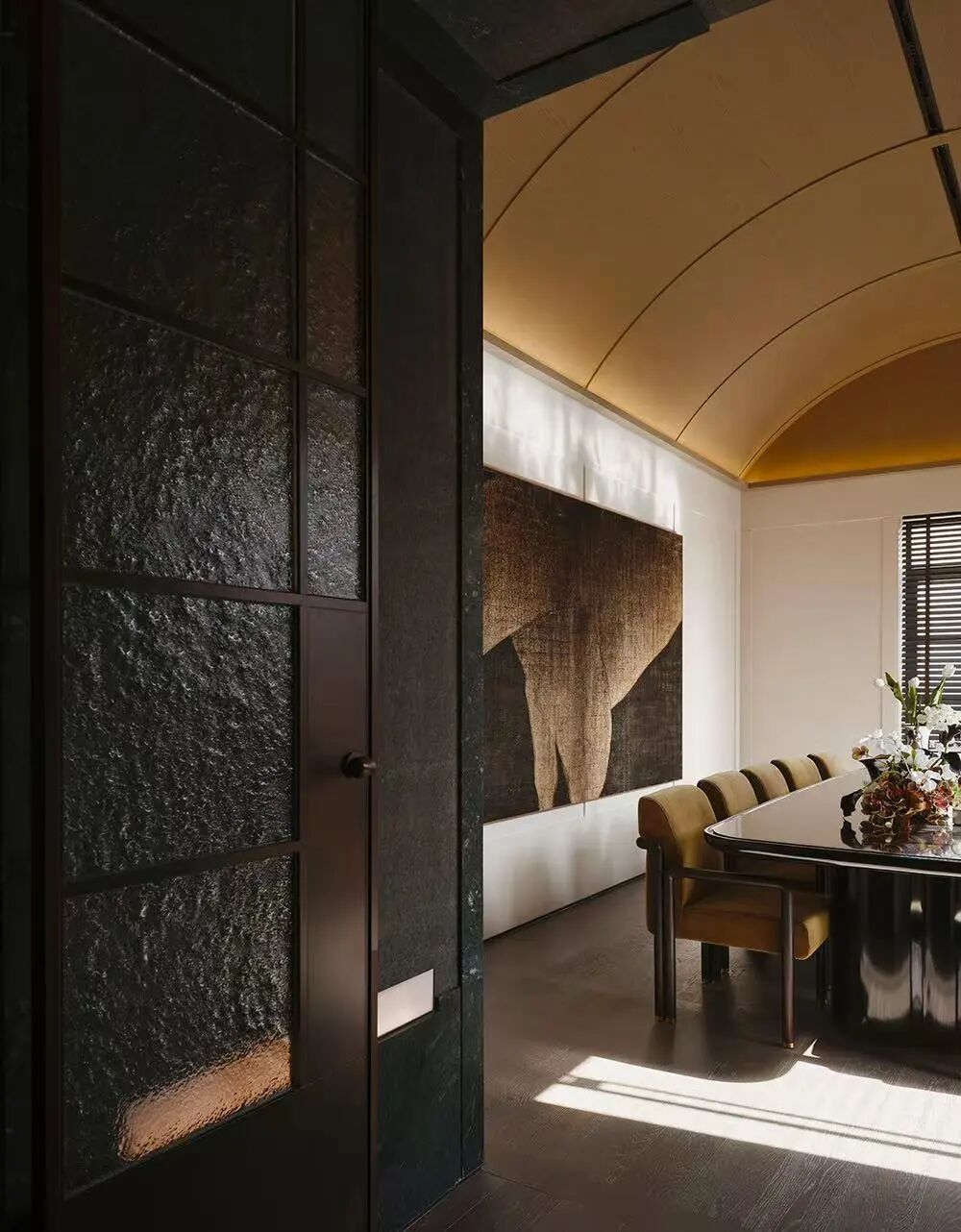
Push open the glass door with old Shanghai charm, and the circular gold leaf ceiling unfolds gently above the dining table. A golden chandelier hanging from the center emits a soft light. The light falls like a fine drizzle, instantly enveloping the entire dining space in a warm glow and creating an elegant yet cozy dining atmosphere.
A screen encloses a quiet space, with hidden jade lamps at the bottom emitting a gentle warm glow. The upper part features a solid wood frame paired with water-patterned glass; through the interplay of light and shadow, one seems to catch a glimpse of the traces of time. A golden screen stands against the east wall, with landscapes outlined in a modern style on it, which complements the gold leaf decorations on the ceiling delightfully. Dining amid such flowing light and shadow retains traditional charm while embracing a touch of modern artistic flavor.
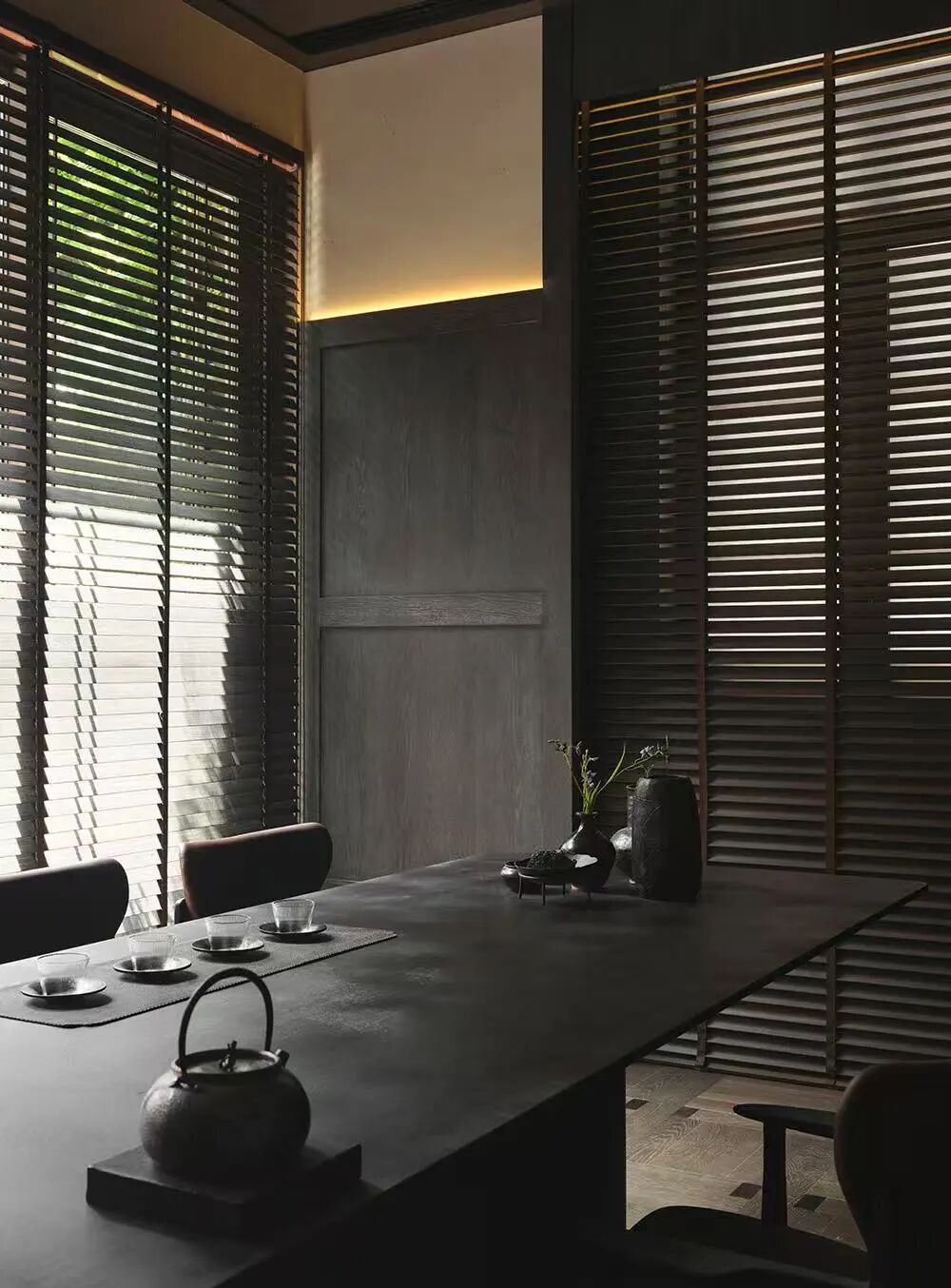
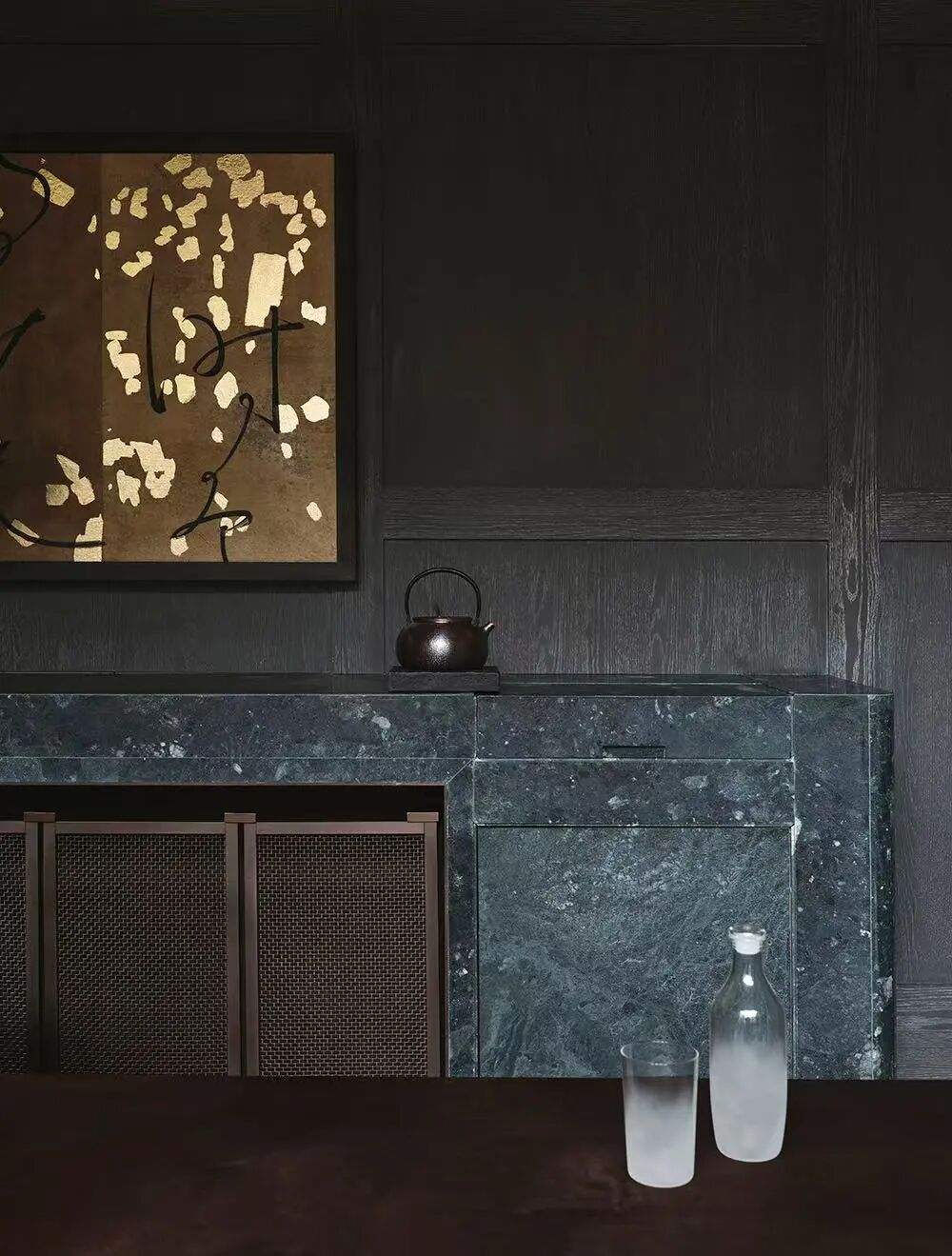
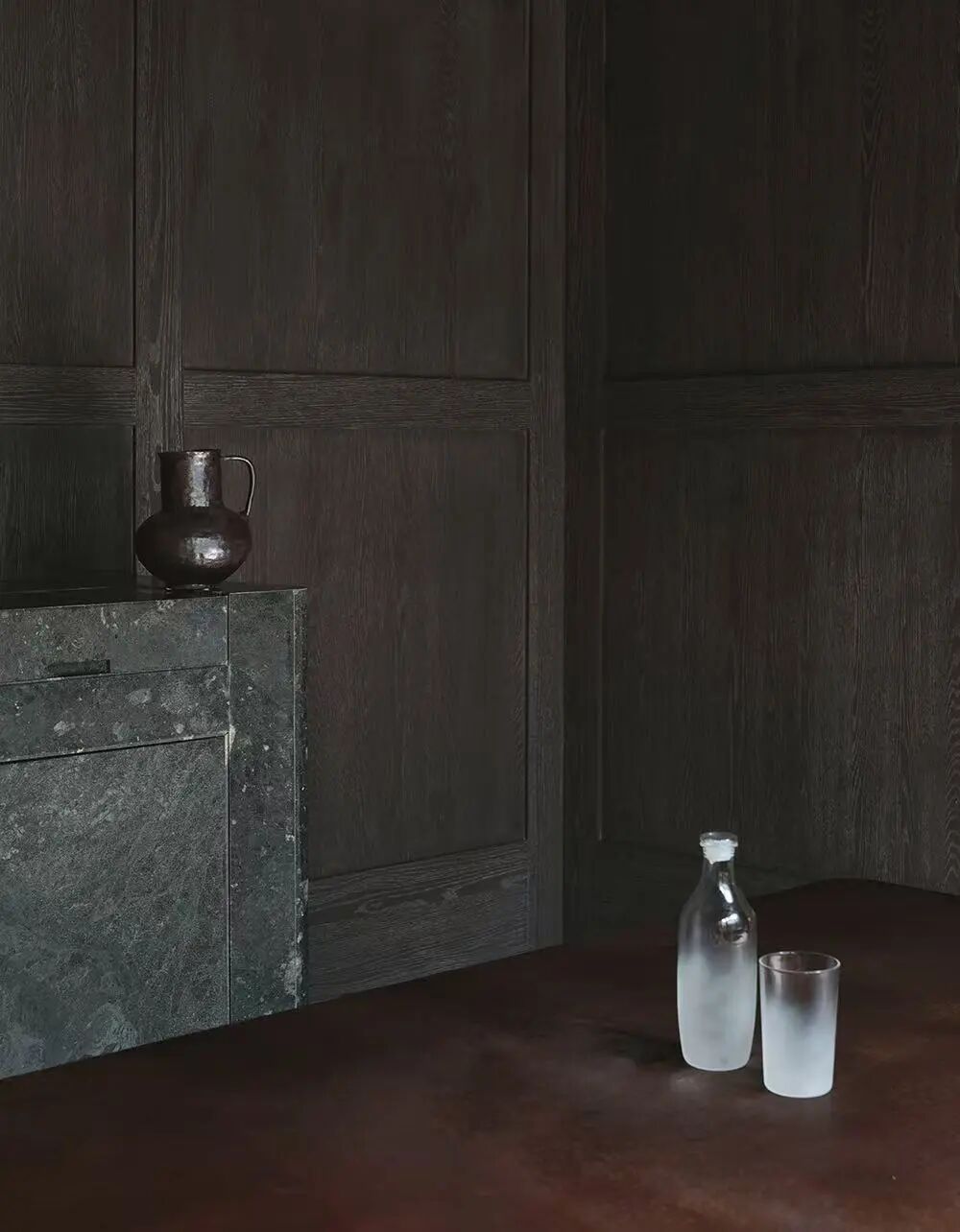
Within the depth of dark ink lies clarity. An old-fashioned stove is placed in the tea room at the southwest corner. When the fire ignites, orange-red flames dance in the dimness; looking in from outside, human figures sway gently with the firelight. As a Japanese writer once said, life is inherently a blend of light and darkness. It is precisely because of the existence of shadows that light becomes precious. Darkness, in turn, gives light more warmth.
The dark wooden walls bear natural grains, with faint traces of wear visible here and there. Three or five friends sit around the stove, brewing tea and chatting; the dancing firelight reflects on their faces, and the entire space is immersed in a warm tranquility that makes people relax unconsciously.
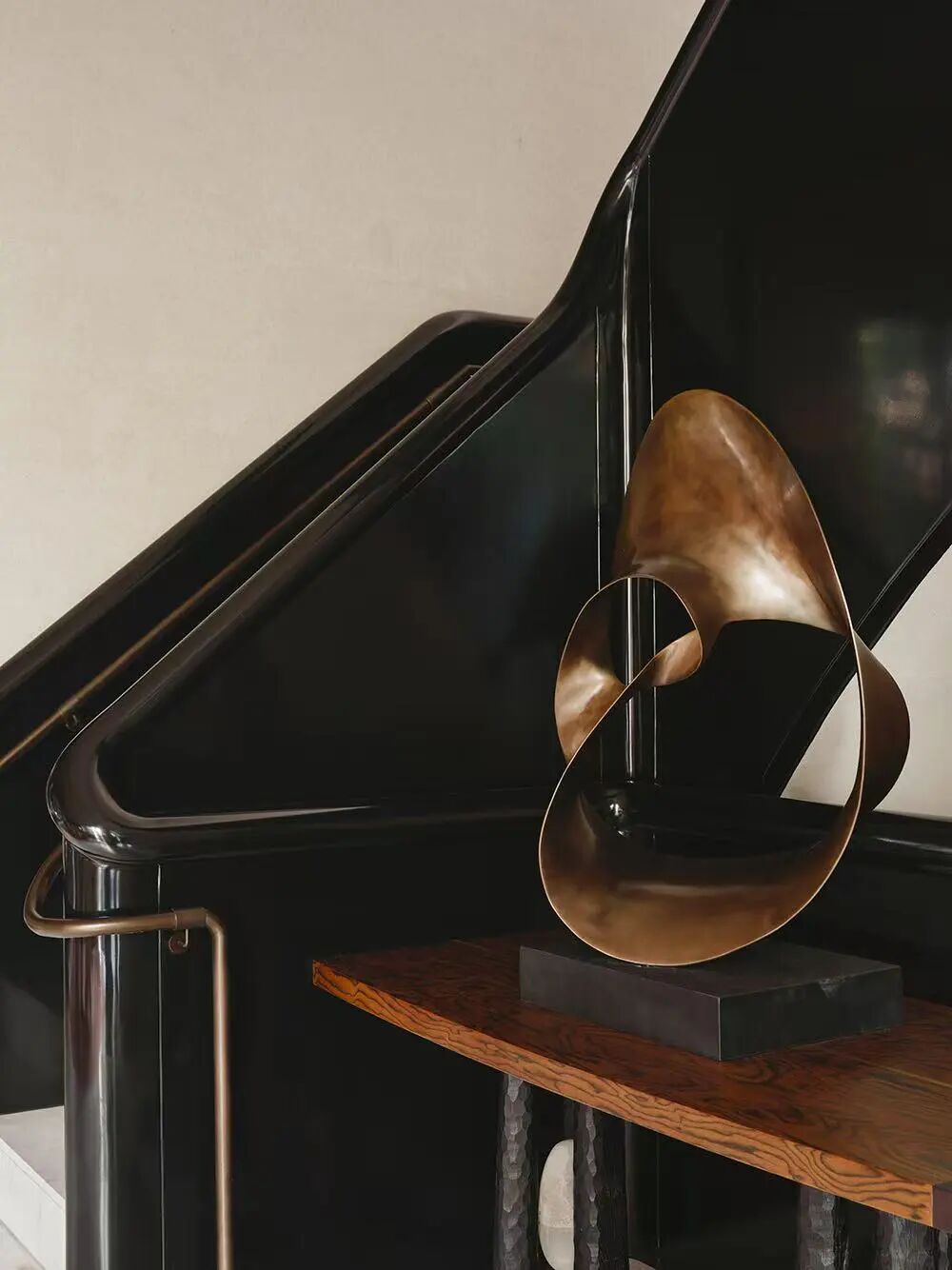
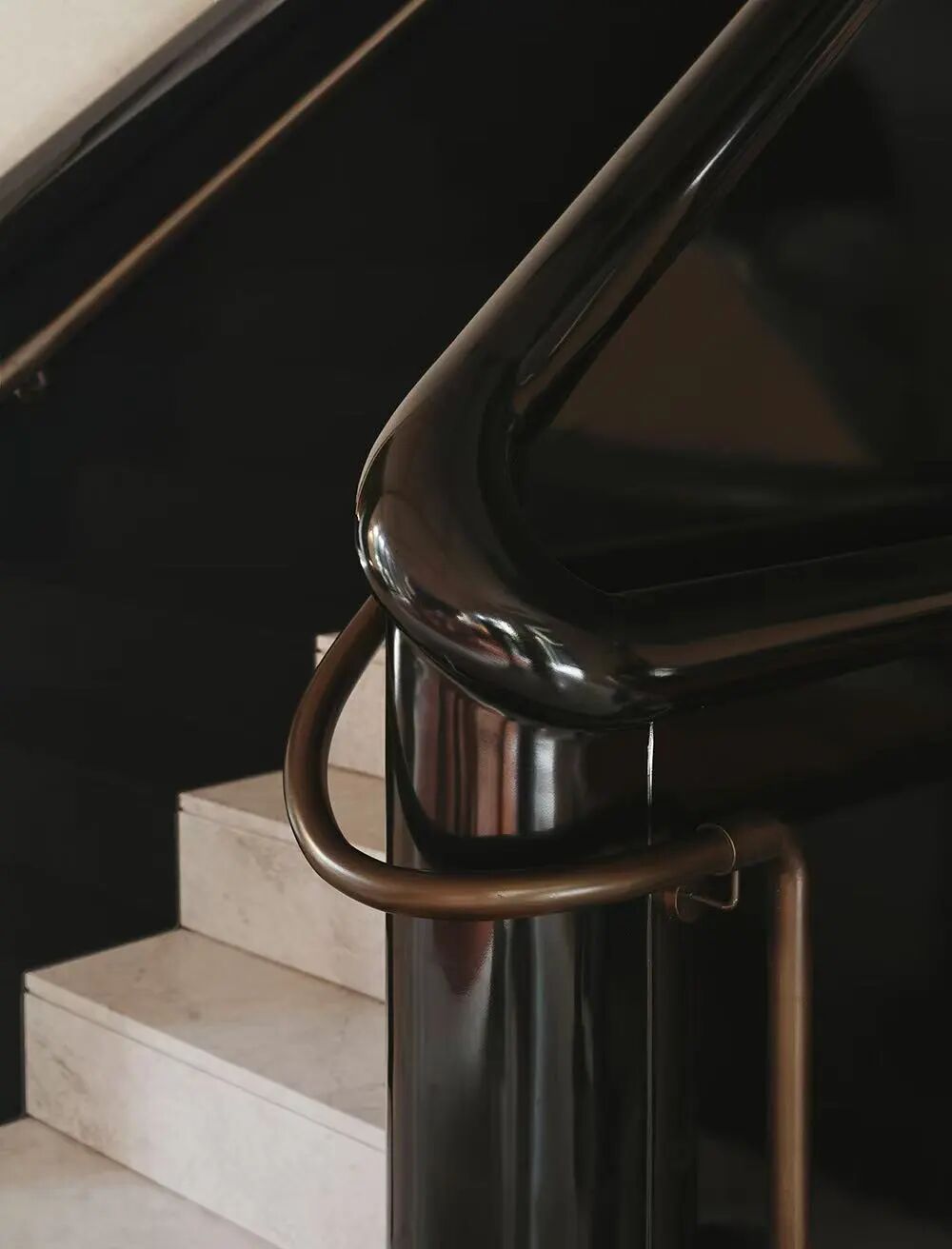
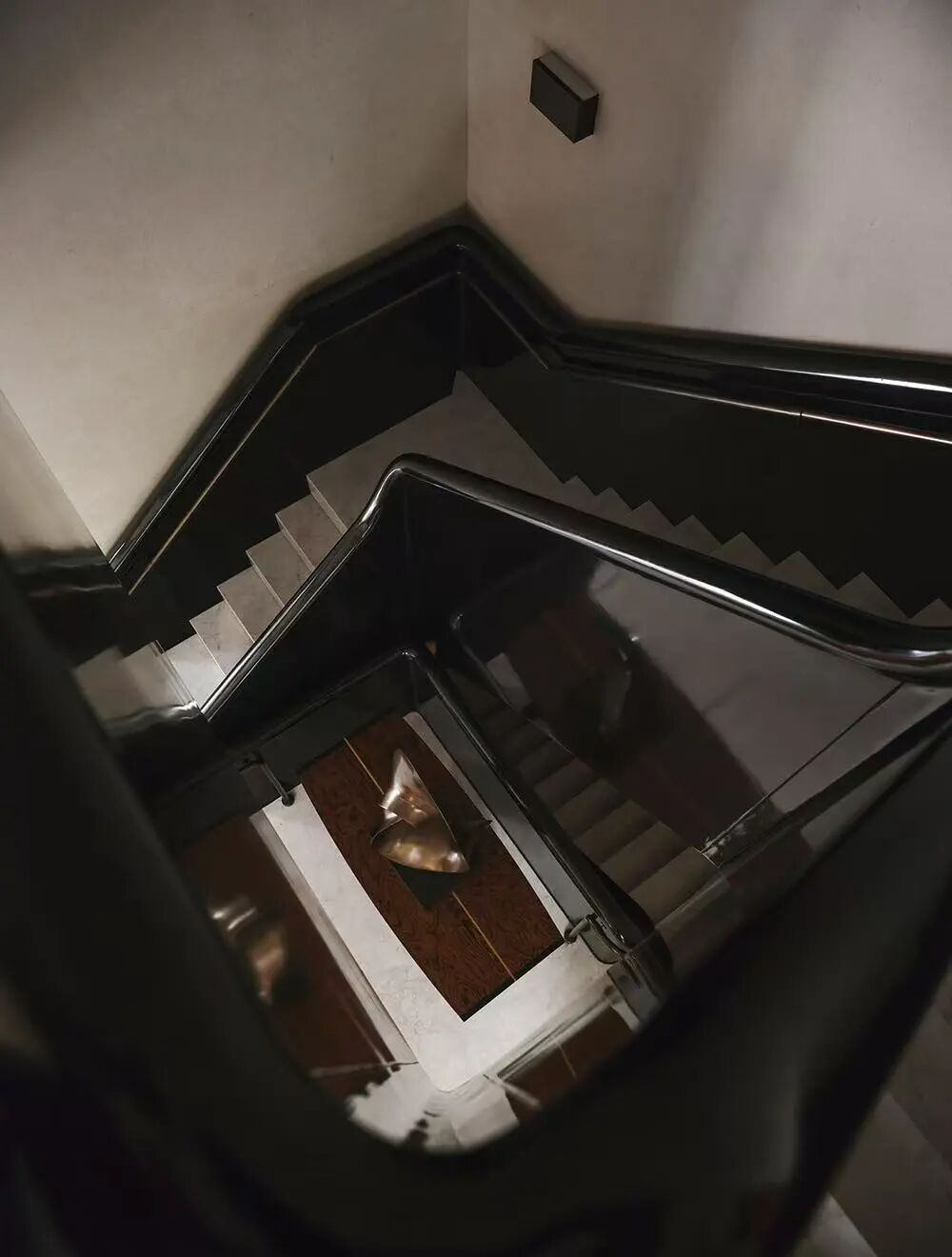
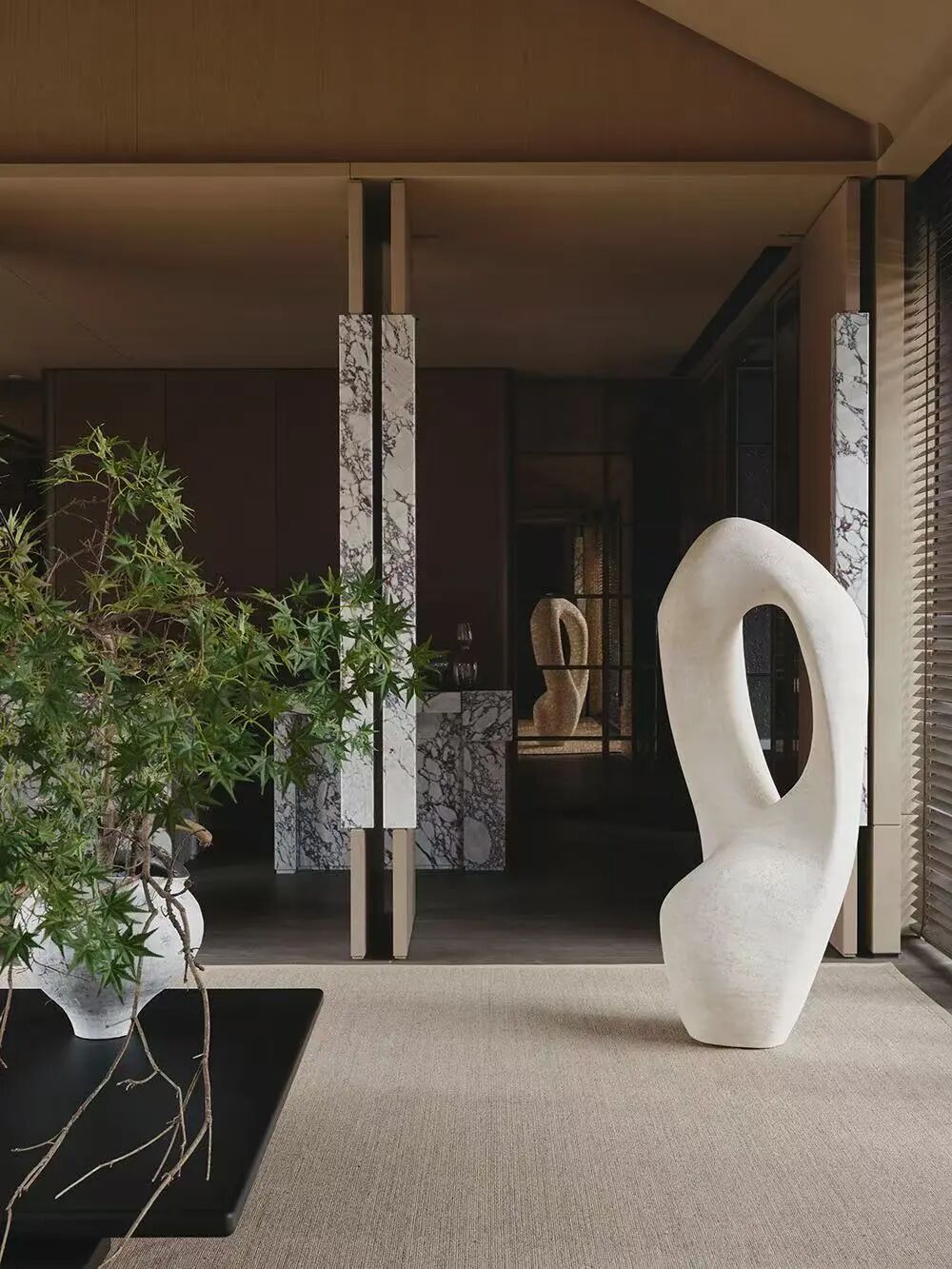
The staircase on the west side of the living room is entirely black, like a segment cut from the night. The black lacquer is calm and restrained, not ostentatious yet full of strength, perfectly setting off the modern sculpture beside it. The handrail extends upward along the light, connecting the upper and lower spaces, being both practical and somewhat artistic.
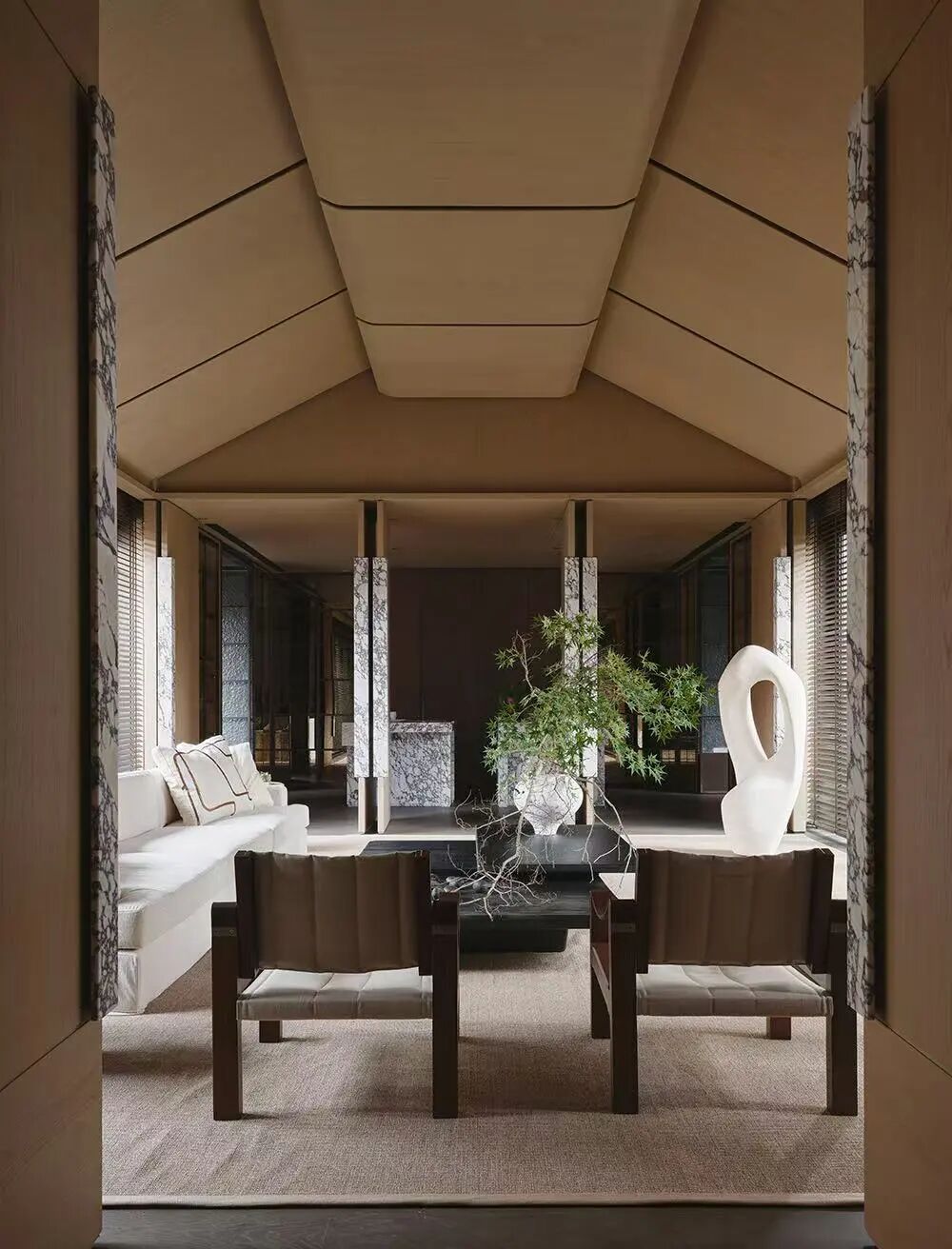
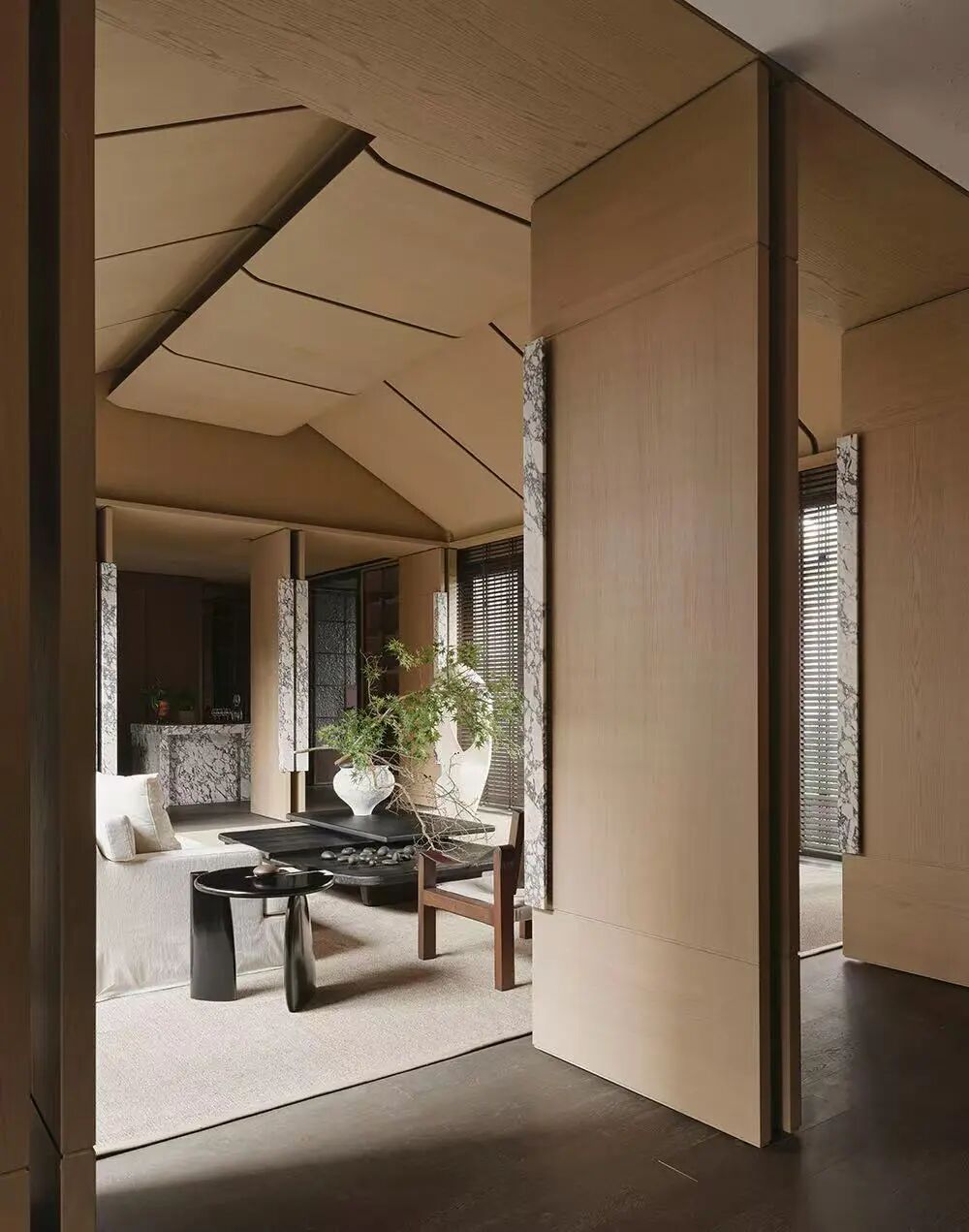
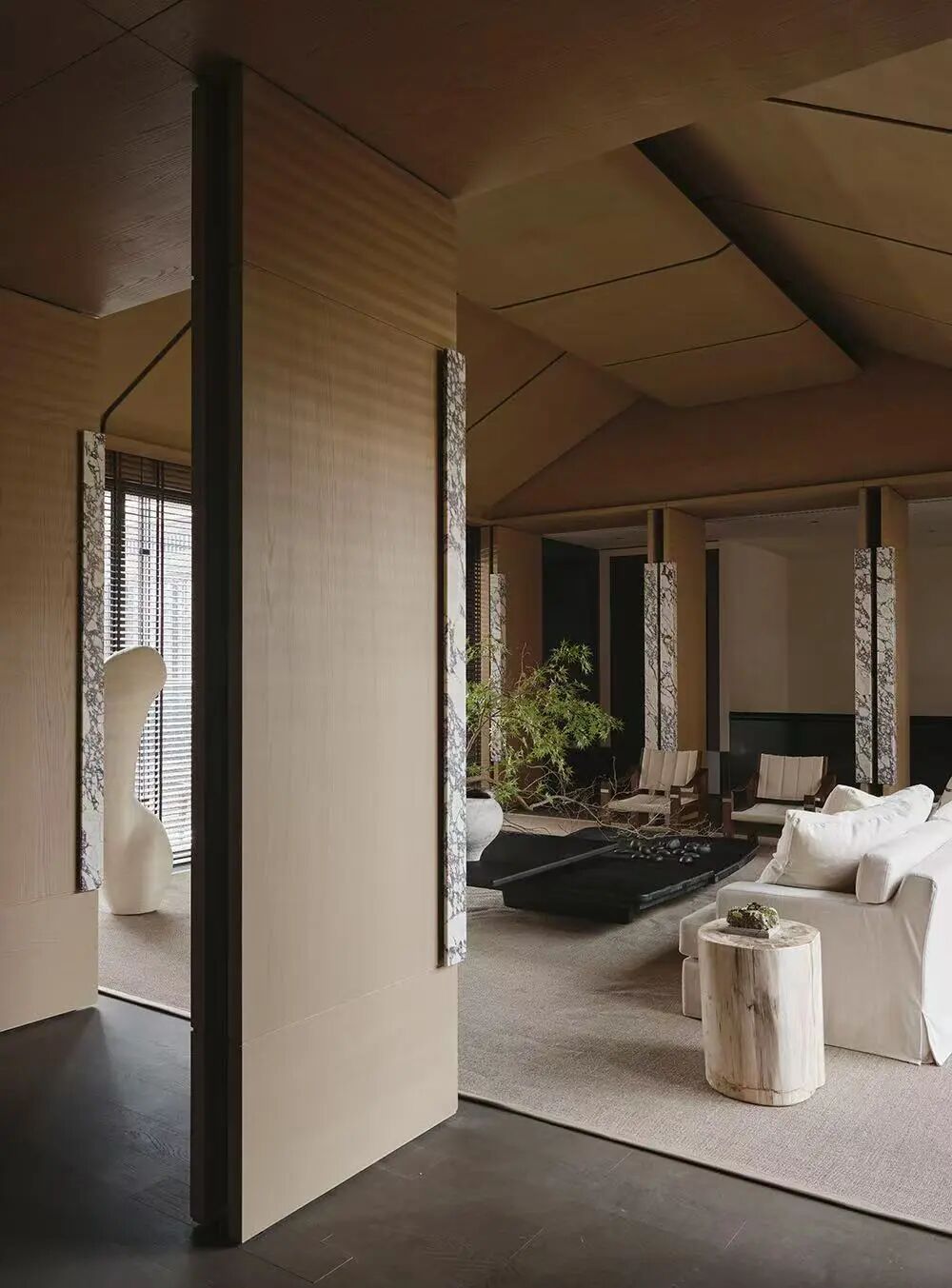
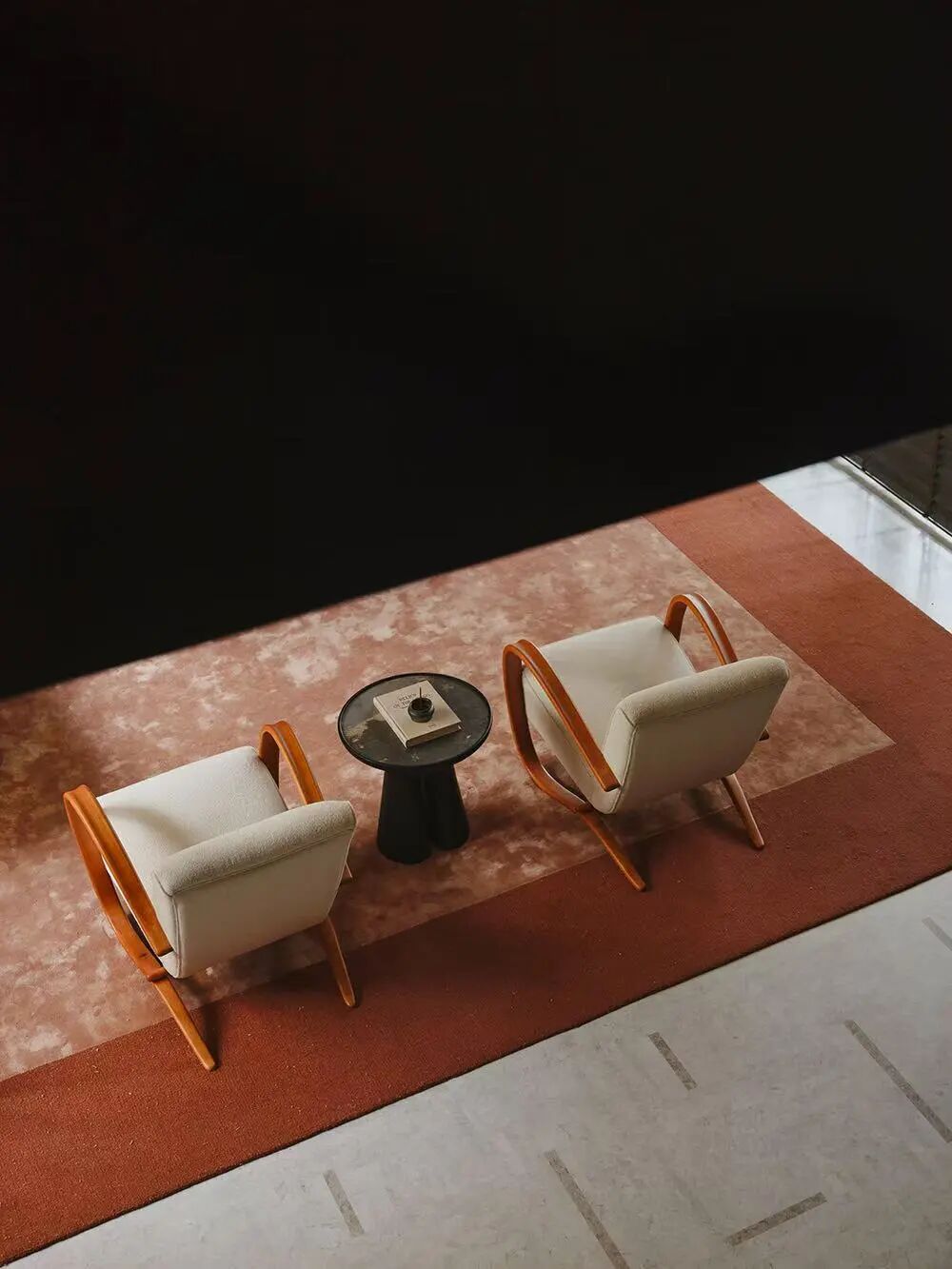
Stepping into the second-floor anteroom, one immediately feels relaxed. Compared to the bustle of the first floor, it is so quiet that people unconsciously lighten their steps. Sunlight filters through the wooden lattice, like spreading a pale golden blanket over the floor. Six sets of wooden doors can be opened and closed freely; each adjustment creates a new spatial experience, making the rhythm of life more flexible.
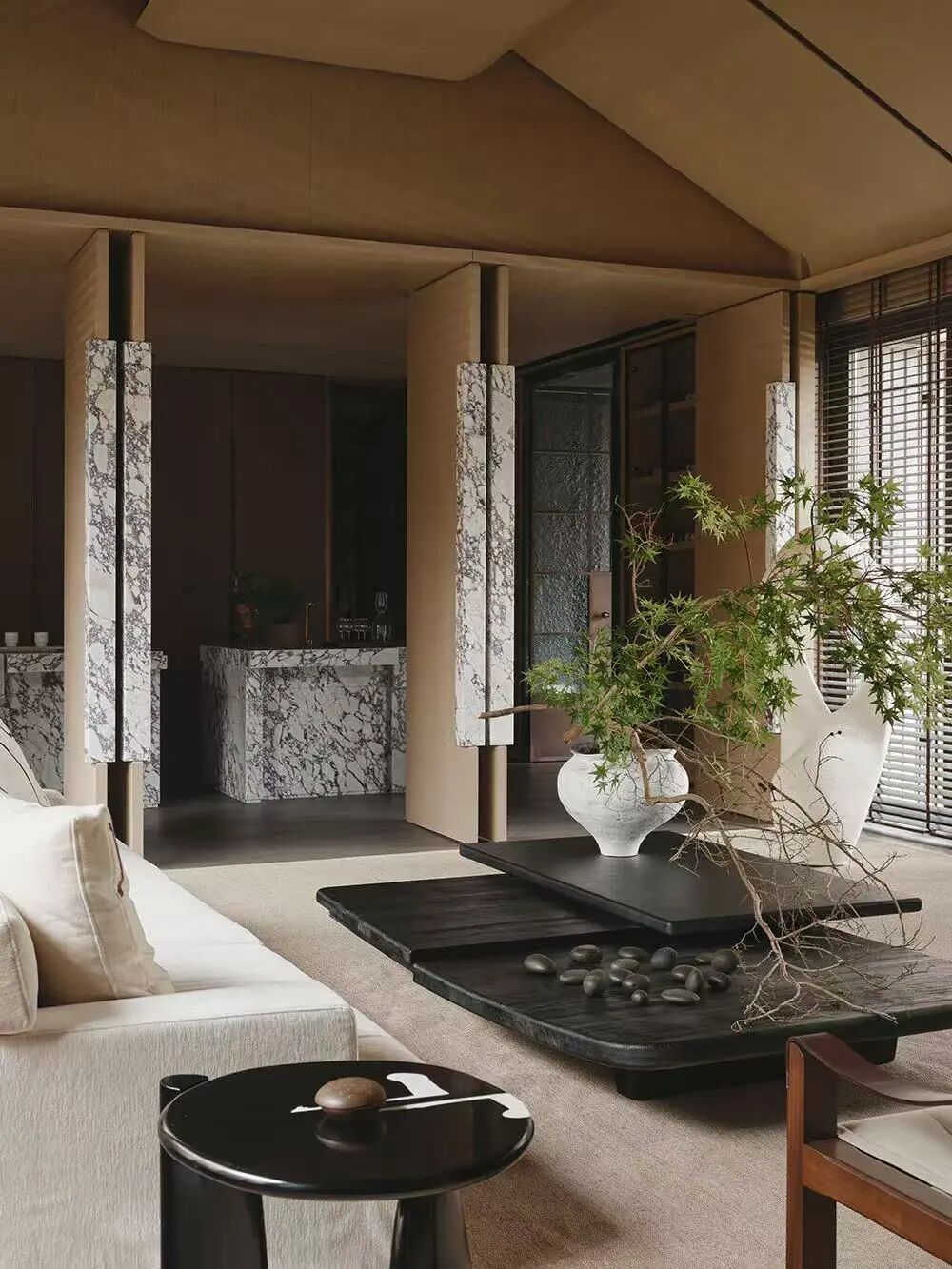
The building's original gabled roof has been preserved, but we have made adjustments with rounded lines. The originally sharp outlines have become much softer, adding a touch of home warmth.
At the end of the corridor is an exquisite bar counter. The cool texture of Bulgari marble creates an interesting contrast with the warmth of the surrounding wooden elements. With lush greenery outside the window and clear wood grains indoors, people can find solace in nature even in this concrete city.
Next to the bar is a Western-style kitchen, featuring a distinctive wooden vaulted ceiling. The proportions of the ceiling and floor have been carefully calculated to echo each other. Several paintings hanging on the walls not only have harmonious tones but also add vitality to the space, making dining time both warm and interesting.
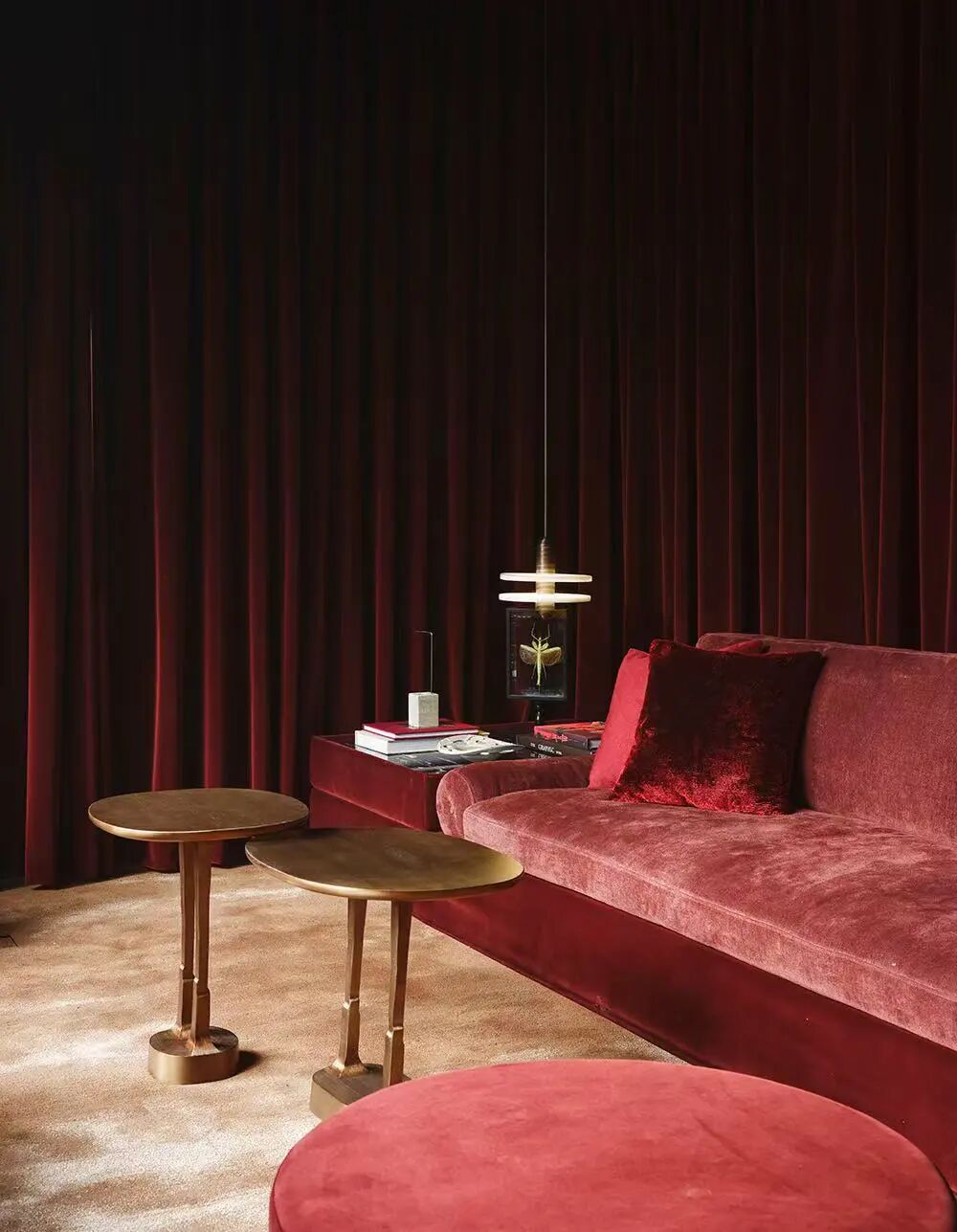
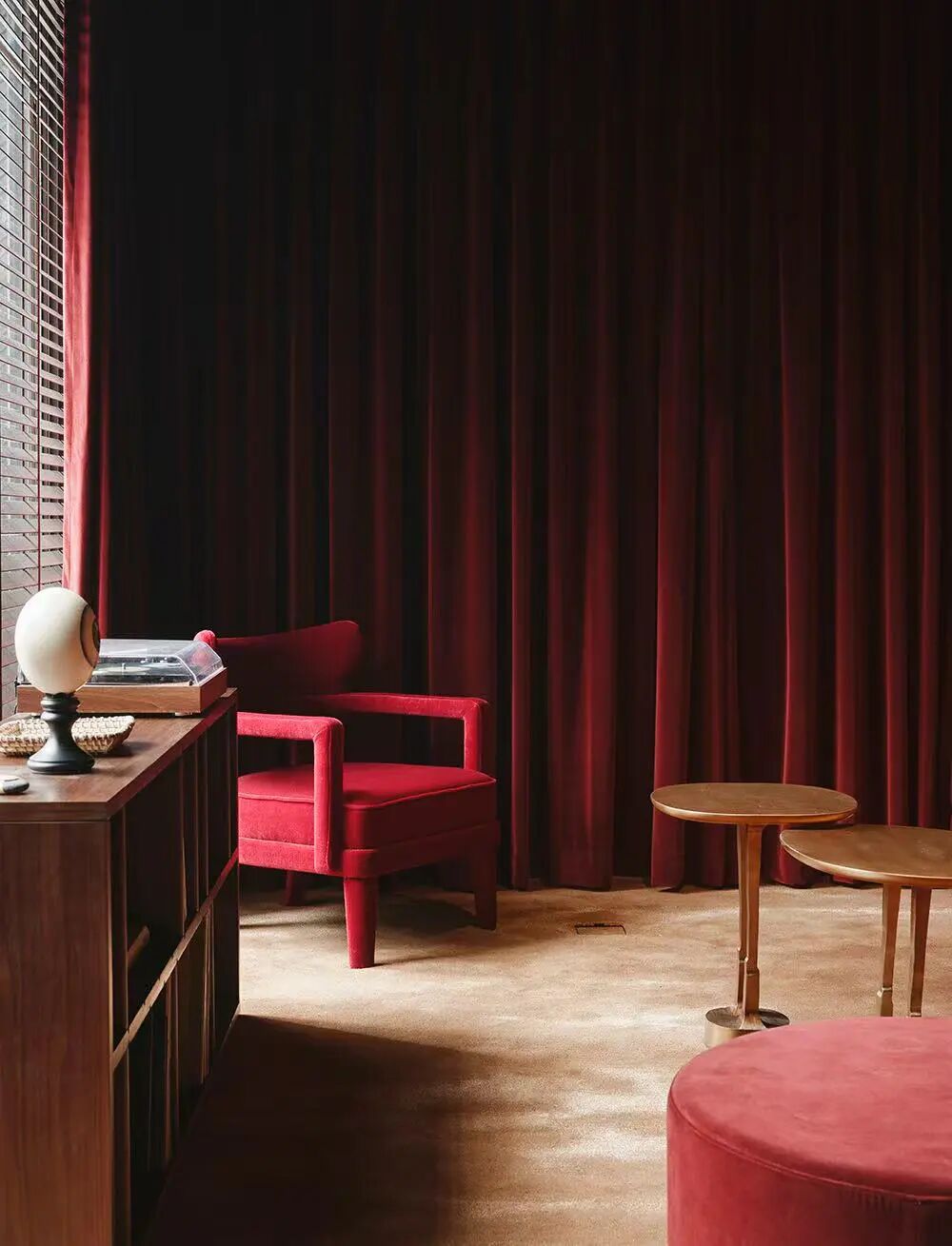
In the memories of old Shanghai, the red curtains of the stage were always particularly striking, carrying a touch of old-time romance. Inspired by this atmosphere, we designed a vinyl record room by the window on the second floor, using colors and textures to recreate that nostalgic vibe.
The room is covered with a thick carpet that feels soft underfoot, muffling footsteps. Deep red velvet curtains hang down, wrapping the entire space like a small theater. The sofa and chairs are also in deep red, exuding warmth with a hint of understated tenderness. Sitting here, listening to the vinyl record spin slowly, with a drink gently swaying in hand, chatting with friends or just sitting quietly in a daze, music becomes the best companion.
"Hui You Ju" is just such a special place. This building integrates Eastern and Western aesthetics. We deliberately use bold contrasting colors to arouse the senses, allowing different colors to interweave into various life fragments and traces of the times. When you imagine the former prosperity of Dongjiadu and then look at today's "Hui You Ju", you will find that it is both a tribute to the past and a response to the present. Like nourishment for the city, it slowly integrates into daily life, making life more flavorful.


 狗仔卡
狗仔卡 发表于 2025-12-23 01:38 PM
 提升卡
提升卡 置顶卡
置顶卡 沉默卡
沉默卡 喧嚣卡
喧嚣卡 变色卡
变色卡